Articles · Lessons
Why the Death Card Almost Never Means Death
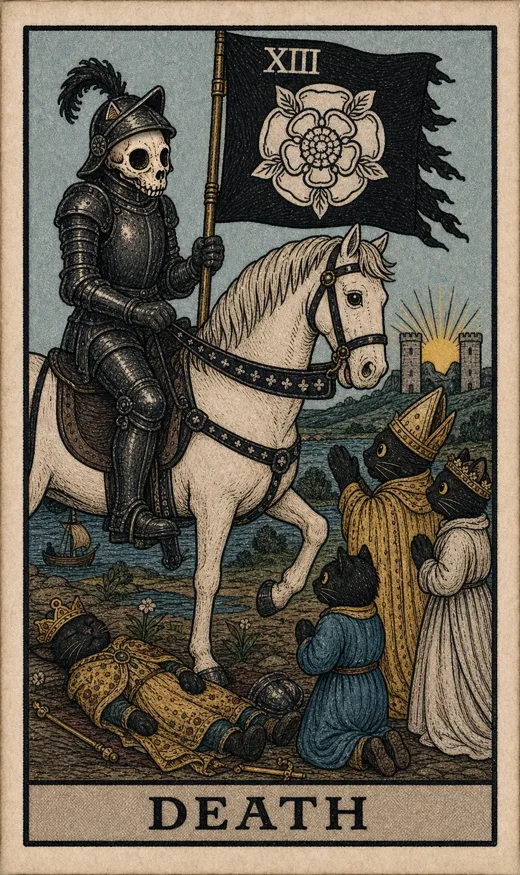
Does the Death card mean death? Almost never. In tarot, Death means an ending that makes room for something new: a job, a habit, a chapter, a version of you. Readers have understood it that way for as long as the modern deck has existed, and the card's own artwork says so.
Where the fear comes from
Movies, mostly. A hooded figure flips the skeleton card, thunder claps, someone gasps. It's great cinema and terrible tarot. In real readings, Death is one of the deck's most common and least alarming cards, because endings are one of life's most common events.
What the card itself says
The imagery is doing the opposite of what the name suggests. The skeletal rider carries a black banner with a white rose, the old symbol of life renewing. And between two distant pillars, the sun is rising, not setting. The scene is drawn mid-renewal: the card shows the morning after, built into the night before.
What Death means in practice
- A chapter closing: a role, a routine, a relationship phase
- Transformation: the old form ends so a new one can start
- A push to release what has already run its course
Reversed, it's usually stagnation: the ending you're postponing. The full card-by-card breakdown is in our Death tarot card guide.
So what should you do when you draw it?
Ask what's ending, and whether you're gripping it. That's the whole reading. If a card still spooks you, the Toe Bean Tarot app shows the full meaning and symbolism behind every draw, so no card stays a jump-scare, on Google Play.
The other "scary" cards get the same honest treatment in our guides to The Tower and The Devil, and every card in the deck is in all 78 tarot card meanings.