Articles · Lessons
The Best Tarot Learning Apps (and What to Look For)
The best tarot learning apps do three things a meanings list can't: they teach in a sensible order, they quiz you, and they bring a card back right before you'd forget it. Most tarot apps do none of the three. They deal a card, show a paragraph, and call it education.
So before any picks, here's the test. If an app passes it, it can teach you tarot. If it doesn't, it's a reference (which is fine, just a different tool).
The three-question test
- Does it have a sequence? Real learning goes structure first: what the majors are, how the suits work, then the cards inside that frame. An app that starts you at card one of seventy-eight is handing you a flashcard deck, not a course.
- Does it check you? Quizzes feel like school, but recall is how meanings stick. Reading a meaning twelve times does less than being asked for it once.
- Does it schedule review? Spaced repetition (resurfacing a card just before you'd forget it) is the single biggest cheat code in memorization. We explain why in how to memorize all 78 card meanings.
Our pick: Toe Bean Tarot (yes, ours)
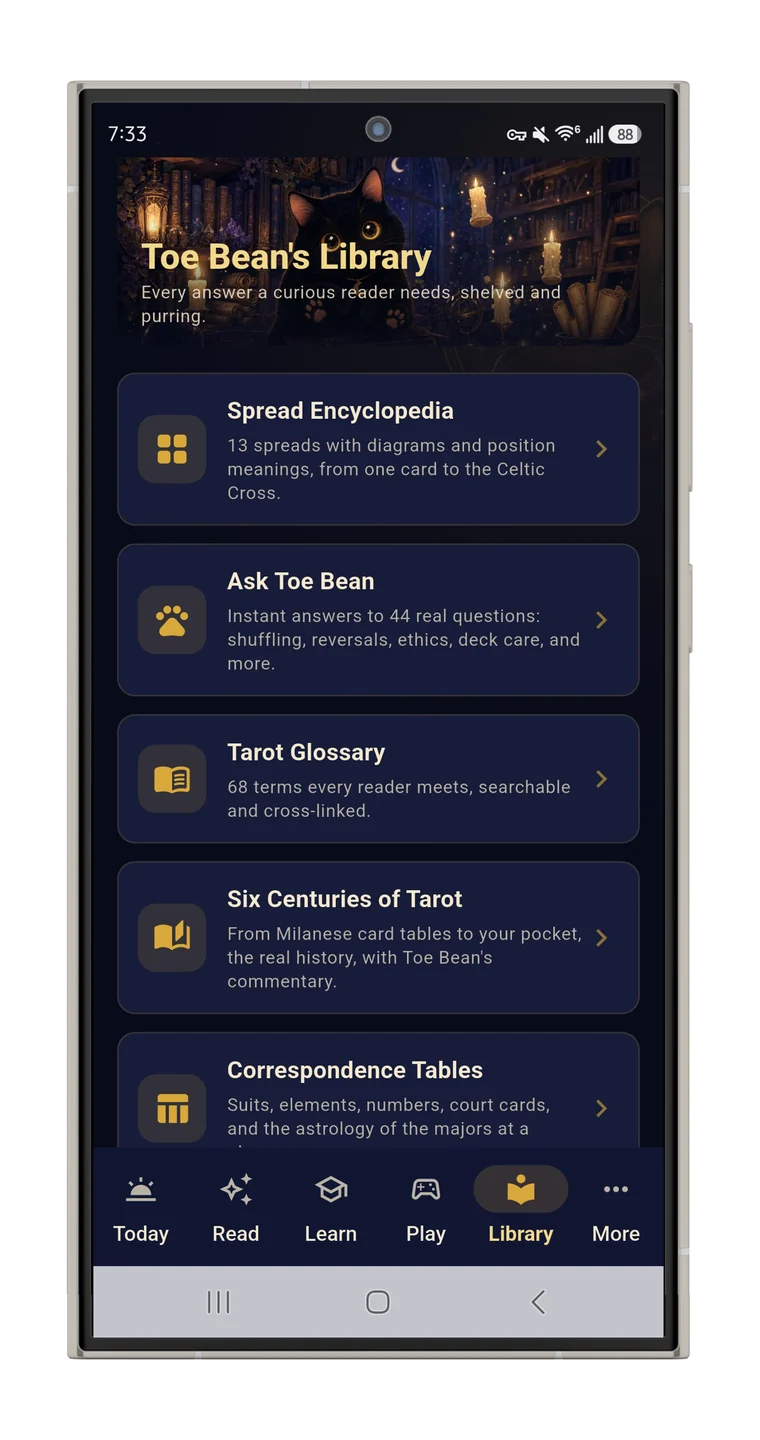
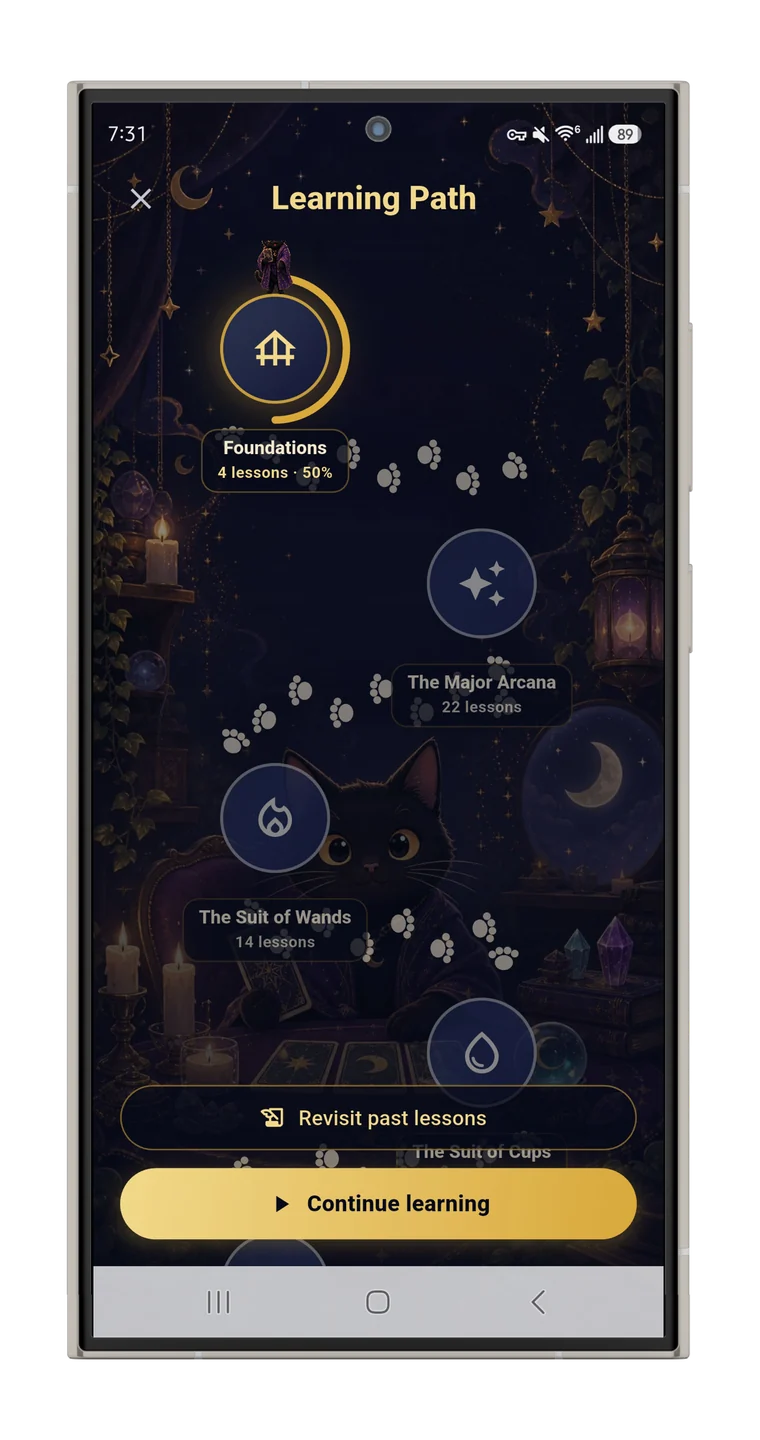
We built our app around that test, so it would be strange not to recommend it. The Learn tab is a full guided course: 98 lesson sections that run from "what is tarot" through the suits to reading technique, with quizzes inside every lesson and a spaced-repetition queue you can feed from anywhere in the app. A cat teaches it. He has opinions.
Plainly, the trade-offs: it's Android only only, and it's paid: $7.99 a month, with a two-week trial that covers plenty of lessons to judge it by.
The free pick: Labyrinthos
If it needs to be free, Labyrinthos is the app we'd point you to, and we say that as a competitor. Its flashcard-style lessons drill card keywords well, the original deck art is lovely, and it's ad-free. The gap: it drills keywords more than readings, so pair it with real practice like a daily one-card draw.
What no app teaches
Reading for an unpredictable human. Apps are the best tool we know for meanings, order, and habit, and they still can't replace putting three cards down for a friend and finding words. Use an app to build the vocabulary, then go use the vocabulary. Here's what apps can and can't do in more detail, and the full best tarot apps roundup covers the non-learning categories too.