
Articles · Lessons
The One Card Tarot Draw: The Ritual That Teaches You Tarot
A one card tarot draw is the simplest reading there is: pull one card, ask one question, and let it be your lens for the day. It takes about two minutes. It's also the fastest way to learn tarot, faster than reading about the cards, because one card at a time is the only amount your brain can properly chew.
Here's how to do it, what to ask, and what to write down.
Why one card beats ten
- You give it your full attention. Ten cards split your focus. One card gets all of it.
- Repetition does the teaching. Draw daily and you'll meet the same cards over and over, in different moods. That's how meanings stick.
- It's short enough to keep doing. A habit you can do in two minutes survives a bad week. A twenty-minute ritual doesn't.
- There's nowhere to hide. With one card you can't cherry-pick the nice one out of a spread.
How to do it
- Ask before you shuffle. Say the question out loud or write it down. Doing it after you see the card is how self-readings go sideways.
- Shuffle until it feels done. There's no correct number (four ways to shuffle, all fine). Cut the deck if you like cutting the deck.
- Take one card. Top of the deck, the one that sticks out, wherever your hand lands. Pick a method and keep it.
- Look before you look it up. Say what you see: who's in the picture, what they're doing, how it feels. Then check the meaning.
- Write one line. The card, the date, and a sentence about what you think it's pointing at.
What to ask
Open questions about your own day. These four cover most mornings:
- What should I keep an eye on today?
- What does today need from me?
- What am I missing right now?
- What's the energy I'm bringing into this?
Skip "what will happen today". It turns the card into a weather forecast you can't use. More on the difference in how to ask tarot questions.
What to write down
Three things, and no more, or you'll stop doing it:
- The card and whether it came up reversed.
- Your first read, before you looked anything up.
- One line that evening: did it land, and how?
After a month you'll have something better than a study guide: a record of what each card means to you specifically. We make the full case for it in tarot journaling.
When the card makes no sense
Some days it won't. Don't reshuffle. Write it down, leave it, and look at it in the evening; a surprising number of daily cards land at 6pm instead of 8am. If it still means nothing, that's fine, and here's what to do when a reading makes no sense.
Ready for more than one card?
When one card starts feeling thin, step up to three. Our guide to 3-card tarot spreads has ten layouts, and the full tarot spreads guide covers everything from one card to the Celtic Cross.
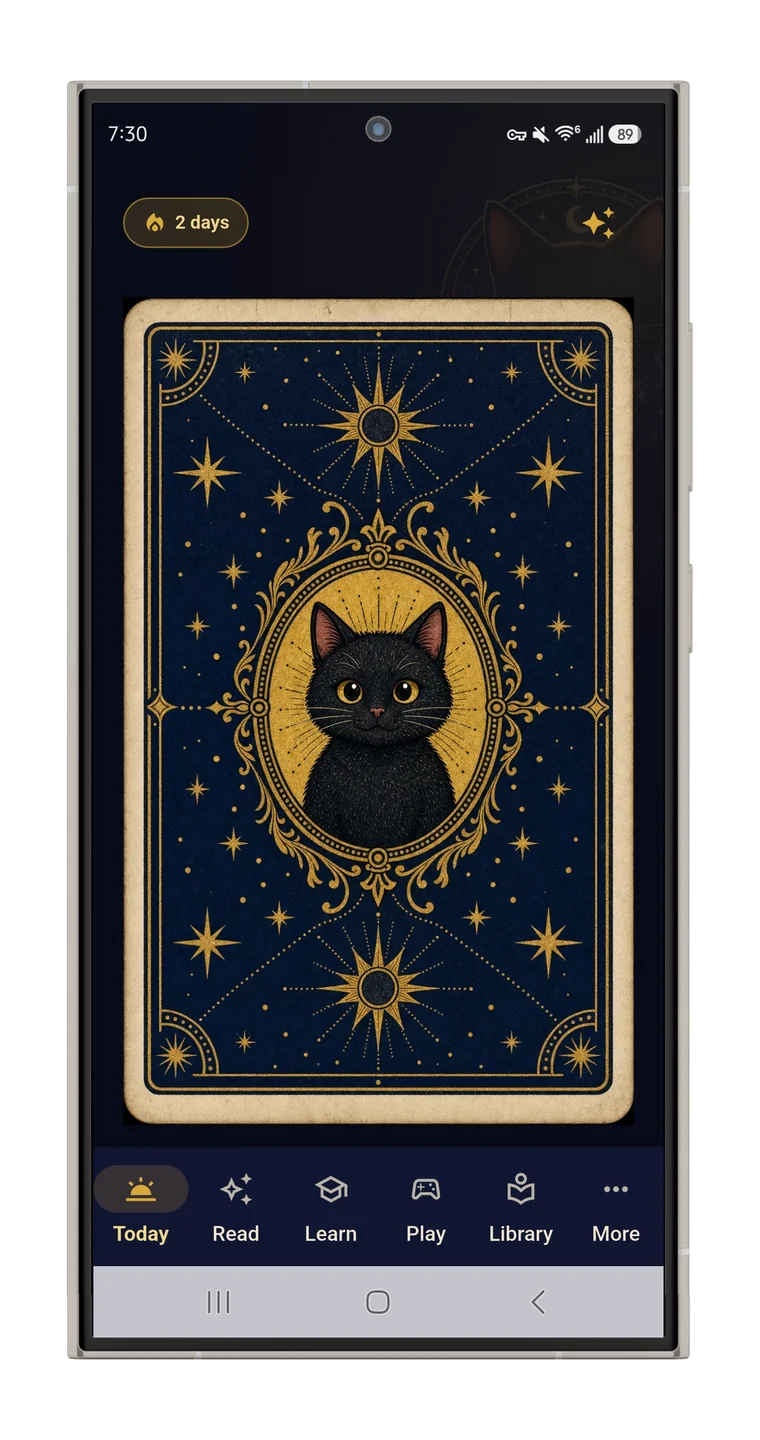
Keeping the streak is the thing the Toe Bean Tarot app does for you. There's a card waiting each day, a place to write your one-line reflection that saves straight to your journal, and a button that sends the card into a spaced-repetition review queue so it comes back before you forget it. It's on Google Play.
Quick answers
What is a one card tarot draw?
Pulling a single card, usually in the morning, and letting it be a lens for your day. One card, one question, two minutes.
What question should I ask for a daily card?
Something open and about you: what should I keep an eye on today, what does this day need from me, or what am I missing.
What if the card doesn't match my day?
Write it down anyway and check back that evening. Daily cards often make sense in hindsight, and the ones that never land are still practice.
Should I reshuffle if I don't like the card?
No. One draw per day is the whole discipline. Redrawing until you get a nice card teaches you nothing except how to shuffle.