
Articles · Lessons
Tarot Spreads for Every Question: From One Card to Celtic Cross
Tarot spreads are just seating charts. Each spot on the table gets a job before you draw ("this one is the past", "this one is what's in your way"), and then the card that lands there answers that specific question. The card gives you the content. The position gives you the context. That's the entire trick, and it's why a spread turns a pile of pictures into a sentence.
Here are the layouts worth knowing, in the order most readers learn them, plus how to pick one without overthinking it.
How a spread works
- Positions are questions. Decide what each spot means before you shuffle, not after you see the card.
- Cards are answers. The same card says different things in different seats. The Star in "hopes" is not the same as The Star in "outcome".
- The layout is one story. Read the cards together, in order, like sentences. Card-by-card lists are where readings go to die.
- More cards is not more truth. A ten-card spread on a small question gives you ten ways to feel confused.
The one-card draw
One card, one question, one small answer. It's the best spread for beginners and the one experienced readers keep using, because a single card gets your full attention. Pull one in the morning as a focus for the day, or any time you want a nudge rather than a forecast.
Good one-card questions: "What should I keep an eye on today?" "What am I missing here?" "What does this situation need from me?" Write down the card and one line about your day, and you've started a practice. We make the case for that habit in tarot journaling: why one card a day beats cramming.
Three-card spreads
Three cards is the sweet spot: enough structure to tell a story, small enough to hold in your head. The classic is past, present, future, but the three positions can be anything you name. Ten of them are laid out in 3-card tarot spreads.
- Past, present, future: how you got here, where you are, where it's heading.
- Situation, action, outcome: the most practical version, for when you want a next step.
- Mind, body, spirit: a check-in rather than a question.
- What helps, what hurts, what's next: good for a stuck project.
- You, them, the connection: for a relationship, without asking the cards to predict anyone's behavior.
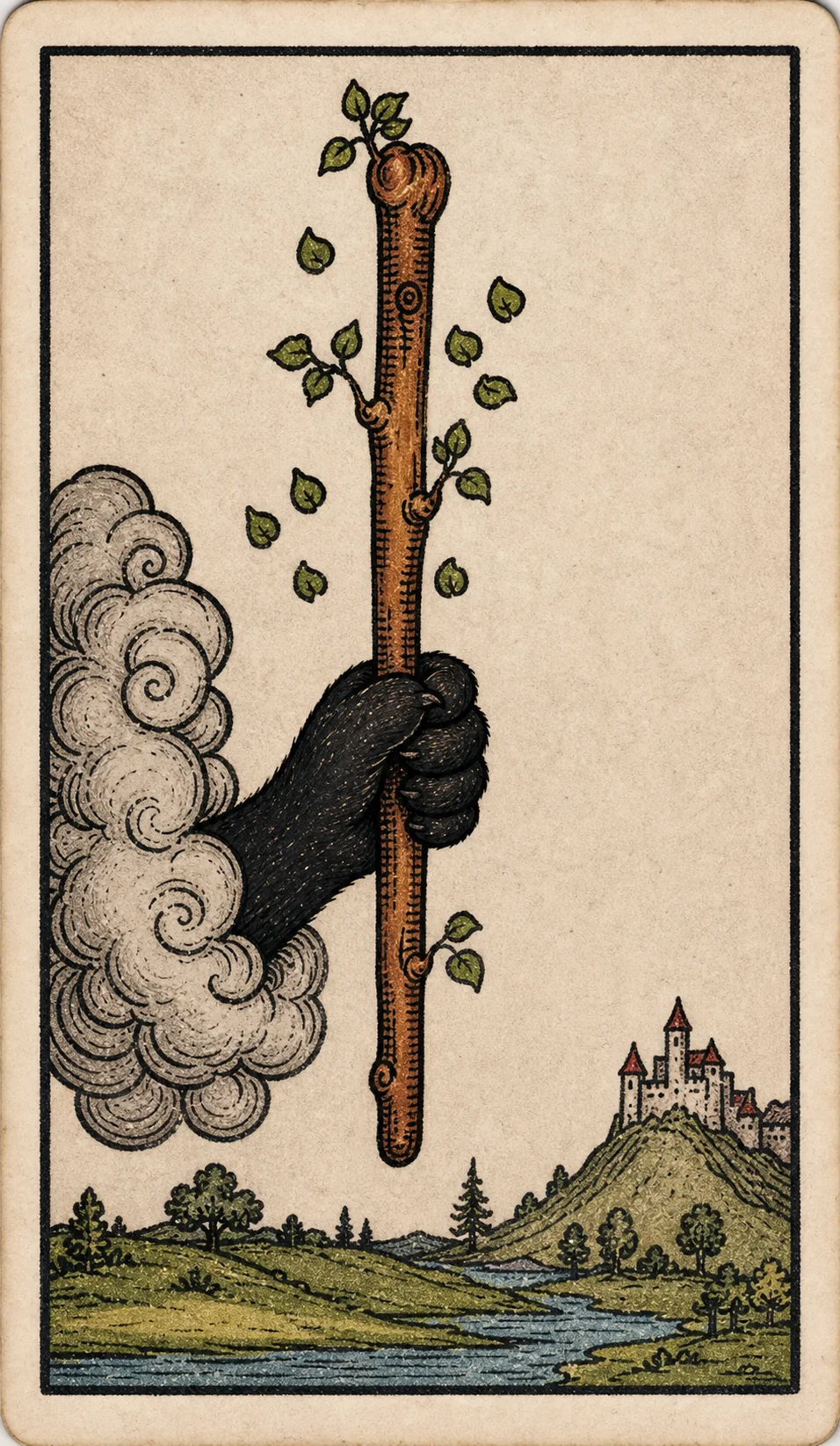
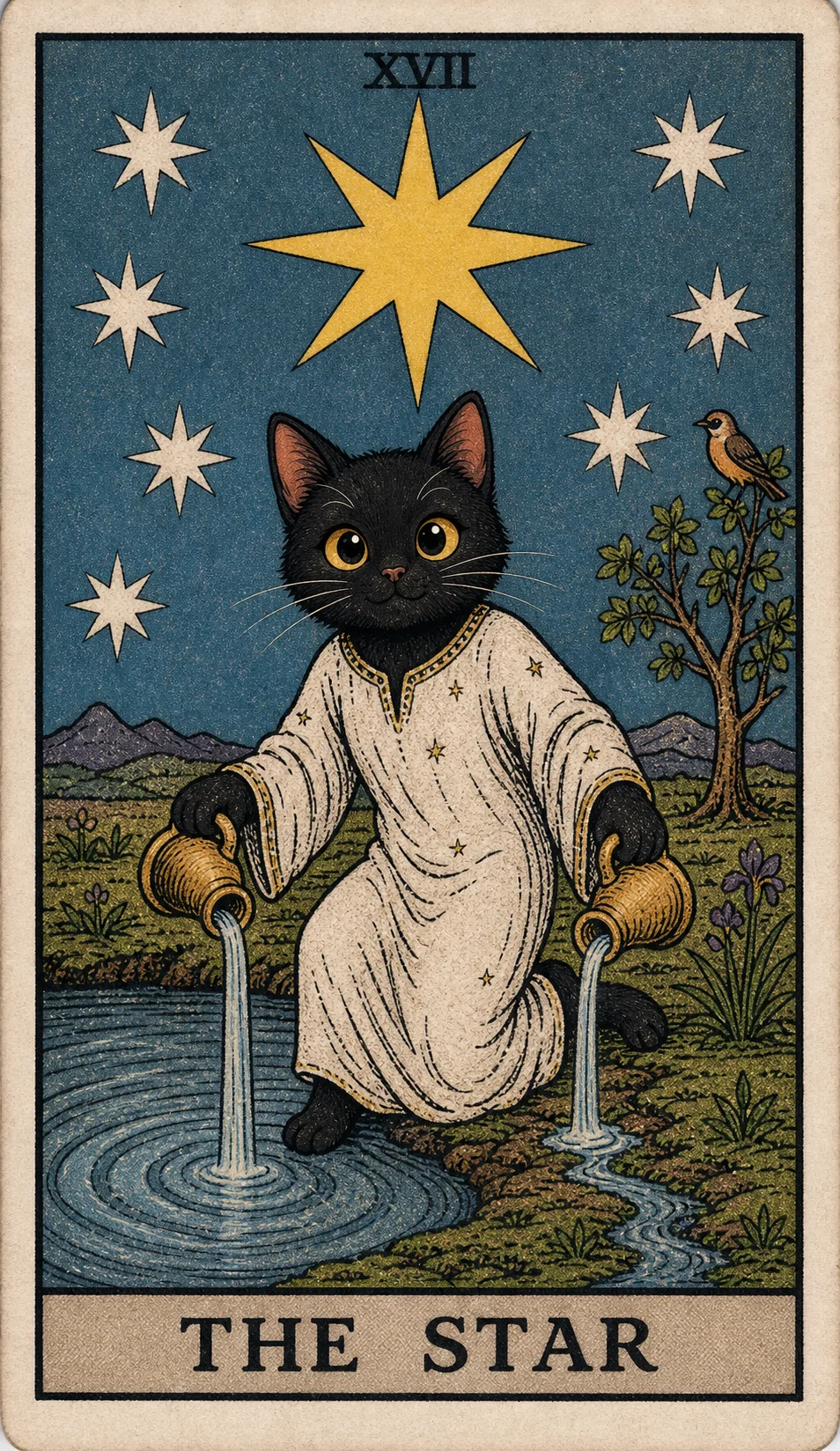
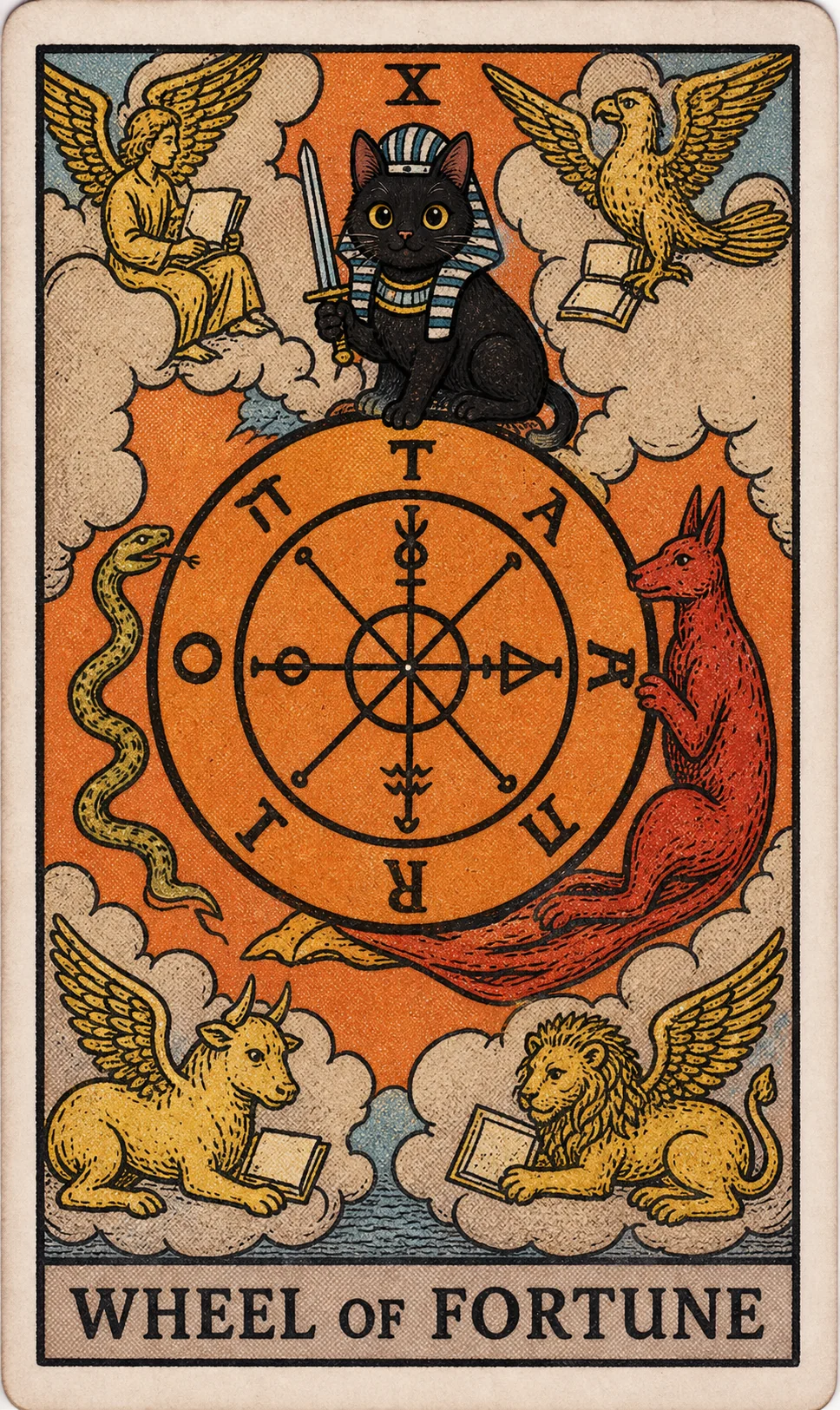
Read that trio as one line, not three: a creative spark you lit a while back (Ace of Wands), a cycle that's turning right now (Wheel of Fortune), and renewal on the other side of it (The Star). Same three cards in different seats would tell a different story, which is the whole point of the seating chart.
The Celtic Cross
Ten cards, and the layout everyone finds intimidating. Save it for a decision with many moving parts, not for "how's my week looking". Every position gets a proper walkthrough in the Celtic Cross explained. The traditional positions are:
- 1. Present: the heart of the matter.
- 2. Challenge: laid sideways across the first card, what crosses you.
- 3. Below: the root, what's underneath this.
- 4. Past: what's just gone by.
- 5. Above: your goal, or what's on your mind.
- 6. Near future: what's coming up next.
- 7. Self: how you're showing up in it.
- 8. Environment: the people and conditions around you.
- 9. Hopes: what you want, and often what you fear.
- 10. Outcome: where this is heading if nothing changes.
Read it in chunks. Cards 1 and 2 are the situation. Cards 3 to 6 are the timeline. Cards 7 to 10 are the staff on the right, running from you outward to the result. If you only remember one thing: the outcome card is a forecast of the current trajectory, not a verdict.
How to pick a spread
- Vague feeling, no question: one card.
- A situation with a shape: three cards.
- A decision between two options: three cards per option, read side by side. More of these in career and decision spreads.
- Something about a relationship: point the positions at your side and the dynamic, as in love spreads that aren't cringe.
- A big, tangled thing you keep circling: Celtic Cross.
- Something specific the standard layouts miss: build your own. Write your questions down, give each a seat, draw.
Ask better questions
The spread can only be as good as the question. Open questions beat yes/no, and questions about you beat questions about other people. Swap "will they call me" for "what am I holding onto here", and swap "will I get the job" for "what would make me a stronger candidate". You'll get something you can use either way. There's a longer list in how to ask tarot questions, and if you want a straight yes or no, here's how to do that sensibly. Treating the cards as fortune-telling instead of a mirror is one of the classic beginner tarot mistakes.
Reading the cards you get
Once the cards are down, name what you see before you look anything up: who's in the picture, what they're doing, how it feels. Then check yourself against the full card meanings. Court cards in a spread often point at a role you're playing rather than a person (see court cards explained), and if you're drawing upside-down cards, our guide to reversed tarot cards covers whether to use them at all. Reading for yourself with nobody around is fine, and it's how most people learn: here's how to practice tarot alone and how to do it without fooling yourself. When a spread lands sideways, this is what to do.
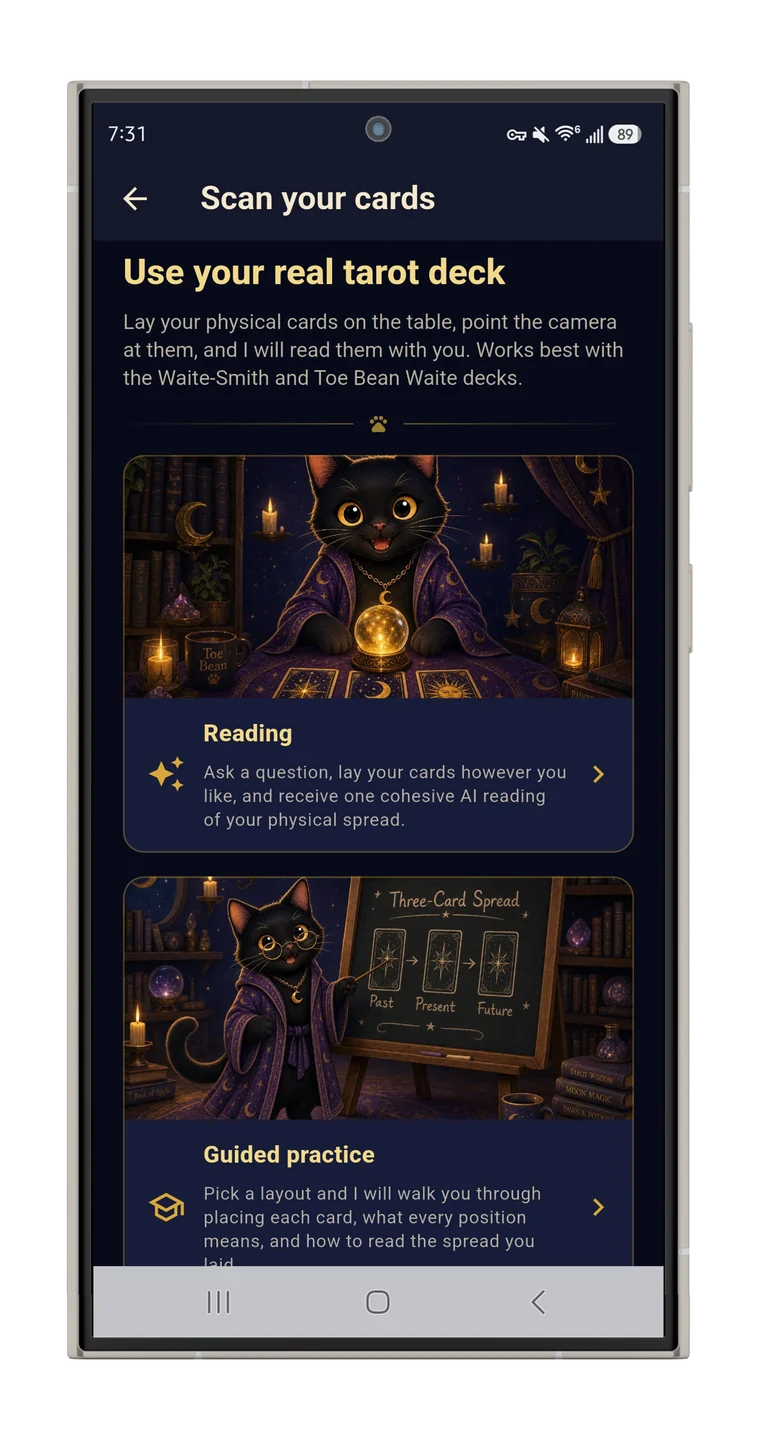
Walking through a spread position by position is the thing the Toe Bean Tarot app does for you. Pick Single Card, Past-Present-Future, or the Celtic Cross, ask your question, and it deals the cards and writes one interpretation that treats the whole spread as a single story. If you own a paper deck, guided practice mode talks you through placing each card, then you photograph the layout and it reads what's on your table. It's on Google Play.
Quick answers
What is a tarot spread?
A layout where each position has a fixed job, like "the past" or "what's blocking you". The card gives the content, the position gives the context.
What's the best tarot spread for beginners?
The one-card draw. It teaches the cards faster than any big layout, because you get a clear read on a single meaning every day.
How many cards should a spread have?
Match the count to the question: one for a daily focus, three for a situation with a shape, ten when a decision has many moving parts.
Can I make up my own spread?
Yes. Write down the questions you want answered, give each one a seat at the table, and draw a card for each.
Where to go from here
Spreads are step four or five of learning tarot, not step one. If you're starting from zero, the complete beginner's roadmap puts everything in order, and learning the 78 meanings gets easier once you're drawing cards in a layout every day.
Every spread guide
- The one card tarot draw: the ritual that teaches you tarot
- 3-card tarot spreads: 10 layouts that cover almost everything
- The Celtic Cross, explained without the overwhelm
- How to ask tarot questions (and what not to ask)
- Yes or no tarot: does it work, and how to do it sensibly
- Love tarot spreads that aren't cringe
- Career tarot spreads that give you a next step
- Reading tarot for yourself without fooling yourself
- What to do when a reading makes no sense