
Articles · Lessons
3-Card Tarot Spreads: 10 Layouts That Cover Almost Everything
3-card tarot spreads are the workhorse of tarot. Three cards give you enough structure to tell a story and few enough pieces to hold in your head, which is why most readers use them more than every other layout combined.
Ten layouts are below. First, the part that matters more than the layout you pick.
Read three cards as one sentence
The most common mistake is reading three cards as three separate mini-readings. Don't. Read left to right like a line of text: this, therefore this, leading to this. The middle card usually carries the weight, and the third card is where the sentence is going, not a verdict.
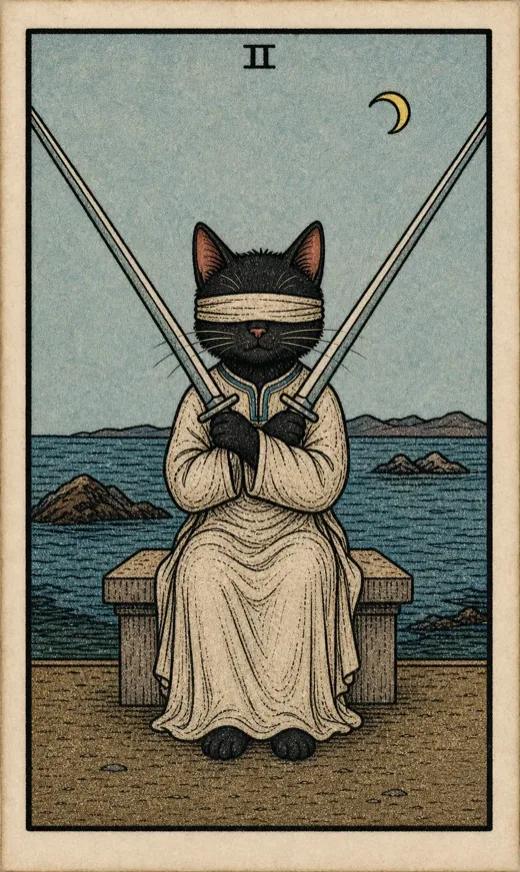
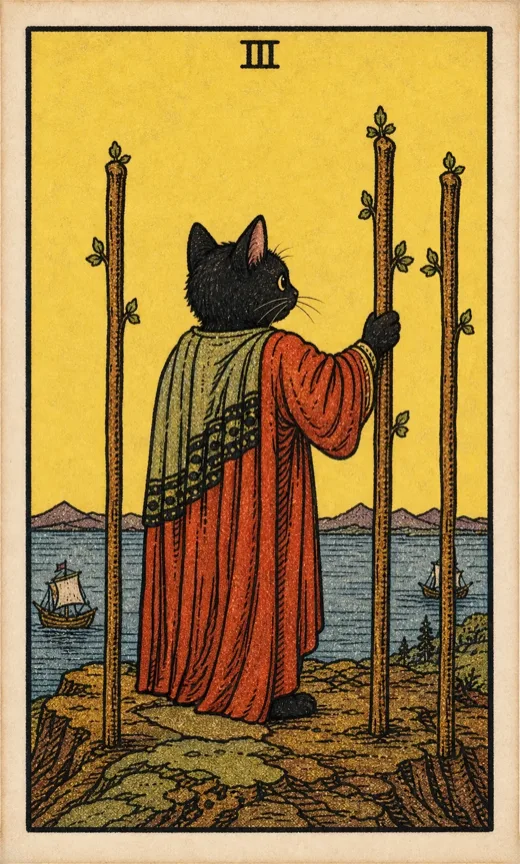
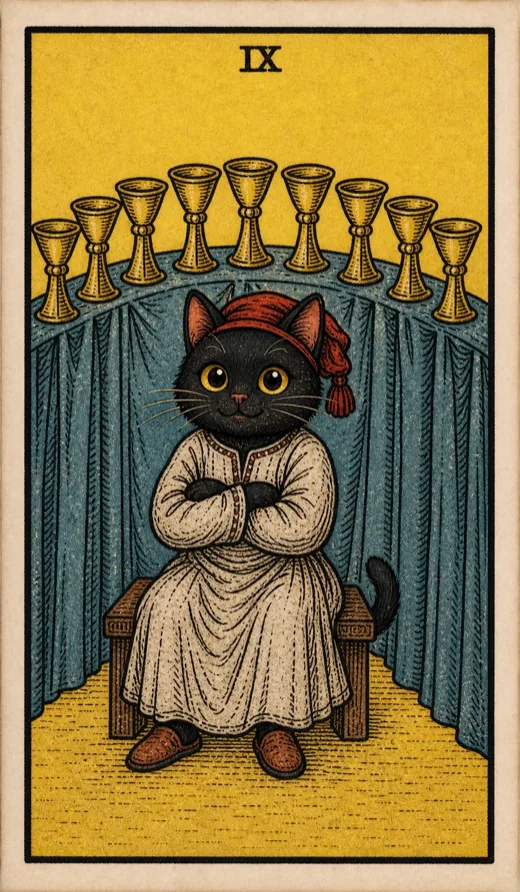
That trio in a situation, action, outcome spread reads as one thought: you're stuck in a stalled decision (Two of Swords), the move is to commit and set something in motion (Three of Wands), and what's waiting on the other side is getting the thing you wanted (Nine of Cups, the wish card). Same three cards in different seats would say something different.
The 10 layouts
Pick by what your question looks like, not by what sounds impressive.
- Past, present, future. The classic. Good when you want to know how you got here.
- Situation, action, outcome. The most practical one. Ends with a next step instead of a prediction.
- Mind, body, spirit. A check-in rather than a question. Good for the days you don't have a question.
- What helps, what hurts, what's next. For a stuck project or a habit you're trying to shift.
- You, them, the connection. For relationships, read as your side, their side, and the thing between you.
- Option A, option B, what you're not seeing. For a fork in the road. The third card is the useful one.
- Stop, start, continue. Borrowed from work retrospectives, and it's excellent.
- Strength, weakness, advice. For a plan you've already made and want a second opinion on.
- What I want, what I need, first step. For when those first two are not the same thing.
- The root, the pattern, the way out. For something that keeps happening to you.
How to lay them out
- Name the three positions out loud before you shuffle.
- Deal left to right, face down, then turn them over together.
- Say what you see in all three before you look anything up.
- Write the sentence. If you can't make one sentence out of it, you're reading the cards separately again.
Three ways these go wrong
- Naming positions after the draw. If you decide what each seat means once you've seen the cards, you'll pick the flattering arrangement every time.
- Treating card three as fate. The outcome position shows where things are heading on the current path. That's a forecast, not a sentence handed down.
- Adding a fourth card because you didn't like the third. That's not clarification, that's shopping.
If you want a bigger layout
Three cards handle most questions. When a decision has genuinely many moving parts, step up to the Celtic Cross, and the full tarot spreads guide covers how to choose. For anything smaller, the one card draw is still undefeated.
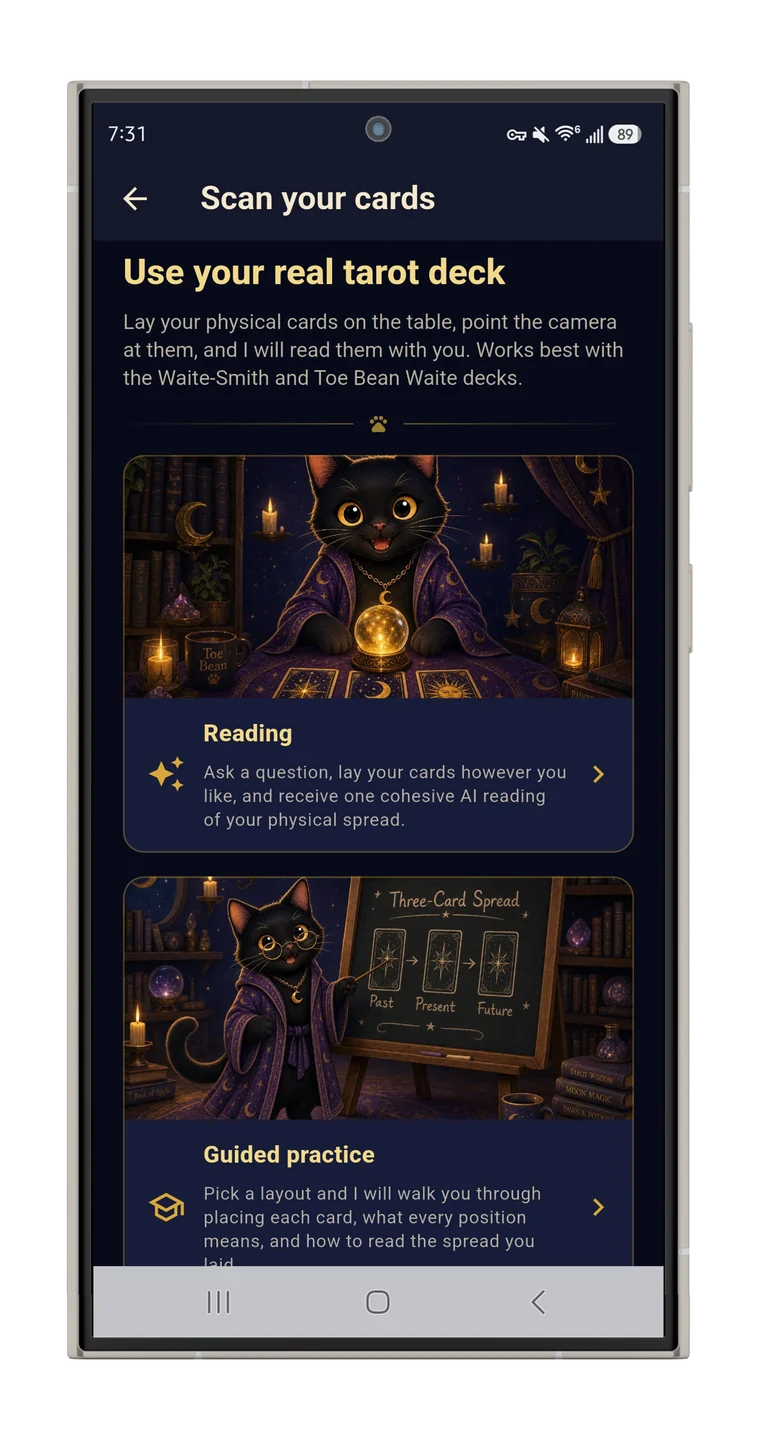
Dealing a three-card spread and reading it as one story is the thing the Toe Bean Tarot app does for you. Pick Past-Present-Future, type your question, and it shuffles, deals, and writes a single interpretation across all three cards instead of three disconnected paragraphs. If you own a paper deck, guided practice walks you through the layout and then reads the cards on your table. It's on Google Play.
Quick answers
What is a 3-card tarot spread?
Three cards laid side by side, where each position has a job you name before you draw, like past, present, and future.
How do you read a three-card spread?
Read it as one sentence, left to right, not as three separate cards. The middle card usually carries the weight of the reading.
What's the best 3-card spread for beginners?
Situation, action, outcome. It's the most useful of the classic layouts because it ends with something you can do.
Can a 3-card spread answer a yes or no question?
Not well. Three cards are built to describe a shape, not to vote. If you want a yes or no, set the rule before you draw.