Articles · Culture
Why Tarot Readings Feel Accurate: What Science Says
Why tarot readings feel accurate comes down to four mental habits psychologists have studied for decades: the Barnum effect, confirmation bias, pattern-seeking, and projection. None of them need the cards to know anything about you. And here's the part skeptics and believers both tend to miss: that's fine. A reading's value never depended on prediction in the first place.
The Barnum effect: statements that fit everyone
In 1948, psychologist Bertram Forer handed his students what he called a personalized personality sketch. Every student got the same one, stitched together from horoscope lines: "You have a great need for other people to like you." "At times you are extroverted, at other times reserved." They rated its accuracy at about 4.3 out of 5. Statements that sound specific but fit almost anyone feel true, and plenty of card meanings are written exactly this way. The High Priestess points to secrets, mystery, silence, and wisdom. Who among us doesn't have a secret?
Confirmation bias: the hits stick, the misses don't
Pull three cards and one of them lands. You'll remember that one. The two that didn't fit are gone by lunch. Do this for a year and your memory holds a highlight reel of uncanny readings and almost none of the duds. Nobody's lying. Memory just files things this way, which is the strongest argument for writing readings down.
Pattern-seeking: your brain builds the story anyway
Psychologists call it apophenia: the habit of finding meaning in random arrangements. Faces in clouds, a plot in three shuffled cards. A spread is random by design, and a brain will build a story from it every single time. That's a feature of the brain, not evidence about the deck.
Projection: the one worth keeping
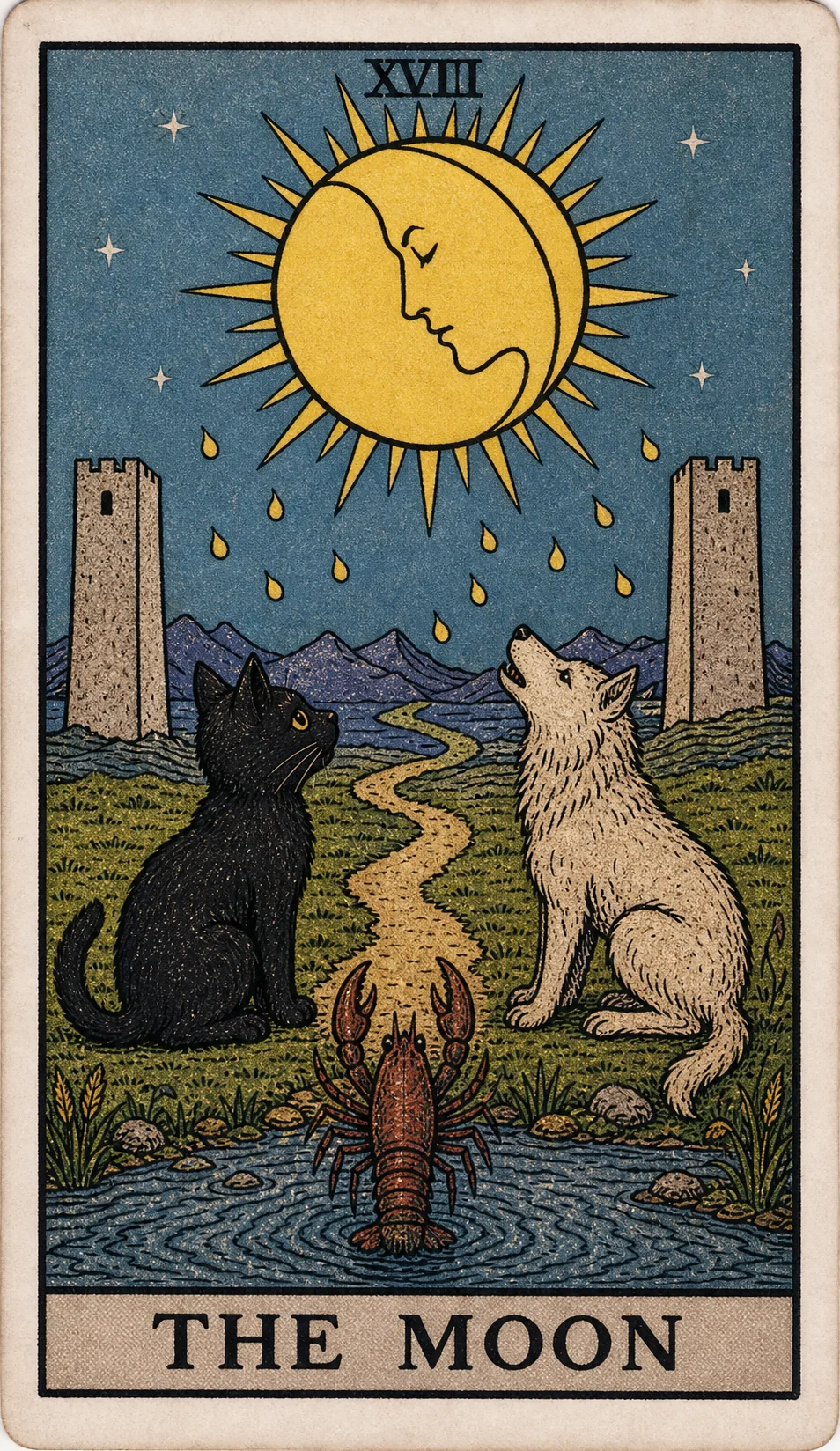
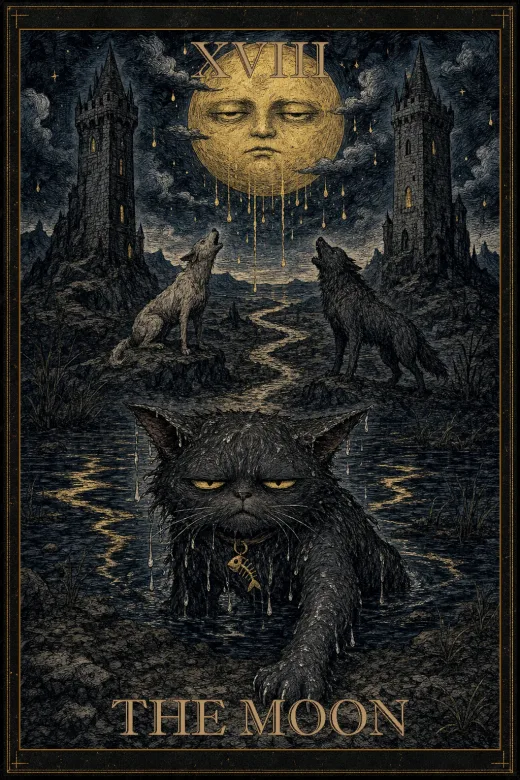
The card images are rich and ambiguous enough to work like an inkblot. Take The Moon: a moon shedding dew over a path between two towers, a dog and a wolf baying, a crayfish crawling out of the water. Its traditional meaning covers hidden things, deception, and error. One person sees a warning about someone they don't trust. Another sees their own 2 a.m. worries. What each person sees says something about what's on their mind, and that's the useful part.
Cold reading: when someone else holds the cards
When another person reads for you, they pick up cues (your face, the way you phrase the question) and steer, usually without meaning to. Reading for yourself removes that and swaps in a different trap, wishful reading, which we cover in reading tarot for yourself without fooling yourself.
So is tarot useless? No. Here's the turn.
If a card surfaces something you were already half-thinking, and you write it down, you've done the thing psychologist James Pennebaker's expressive-writing research found helpful: putting what's on your mind into words. Tarot is a structured excuse to do that. The reading's value doesn't depend on the deck knowing anything. It depends on you noticing what you noticed. That's a big part of why tarot keeps having a moment, and it's why the question of whether tarot is a religion mostly dissolves once you look at what people are doing with it.
How to use it well
- Ask open questions, not predictions. "What am I not looking at?" beats "Will they text?" Our guide to asking tarot questions has more.
- Notice the cards you want to skip. The one you'd rather reshuffle is usually the interesting one.
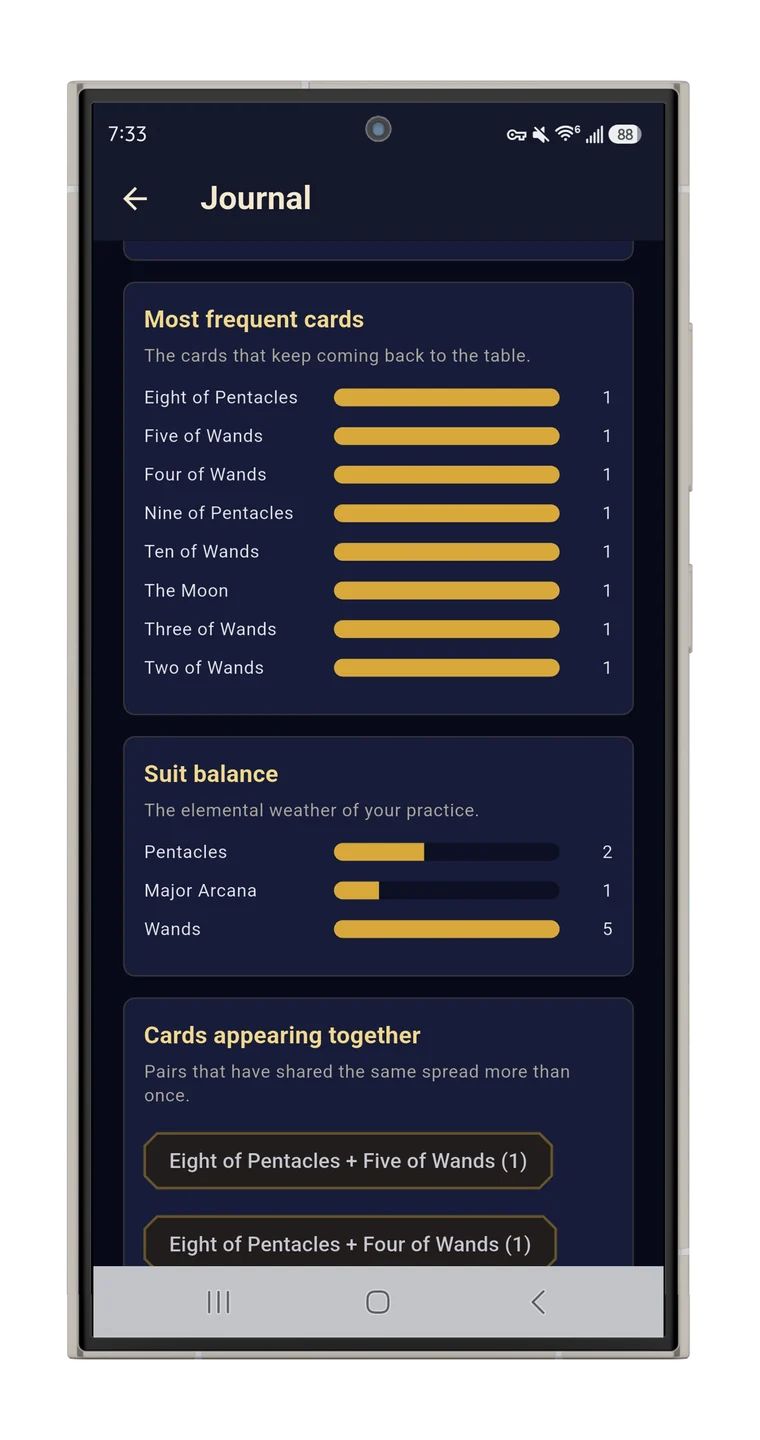
- Keep a journal. Check your own patterns over time instead of trusting memory, which, see above, cheats. Tarot journaling is the habit; the Toe Bean Tarot app (Android) does the counting for you, with an Insights view of your most frequent cards, suit balance, and cards that keep turning up together.
- When a reading makes no sense, that's data too. Here's what to do with it.
The cards don't know you. You do. The deck is just very good at getting you to say so out loud.