
Articles · Lessons
Digital Tarot vs. a Physical Deck: Do the Cards Care?
Digital tarot works the same way paper tarot does: a shuffle you can't predict hands you an image, and the image hands you a question about your life. The cards don't care whether the shuffle happened in cardstock or in code. What changes between the two is you, and that's worth taking seriously.
What a physical deck does better
- Ritual. Clearing a table, shuffling with your hands, laying cards down: the ceremony slows you into paying attention, and attention is most of a good reading.
- Tactile memory. Handling a card while you learn it builds a physical association a screen doesn't.
- Reading for others. Handing someone the deck to shuffle is part of the experience. Handing them your phone isn't the same moment.
What digital does better
- It's always with you. The daily draw that teaches you tarot survives commutes, waiting rooms, and vacations.
- It remembers everything. Every reading logged, searchable, and turned into patterns: which cards keep coming, which suits dominate. A paper journal can do it, if you keep it up. An app just does it.
- It can explain itself. Meanings, lessons, and interpretation live one tap from the card, which is why apps are so good for learning.
What the tradition says
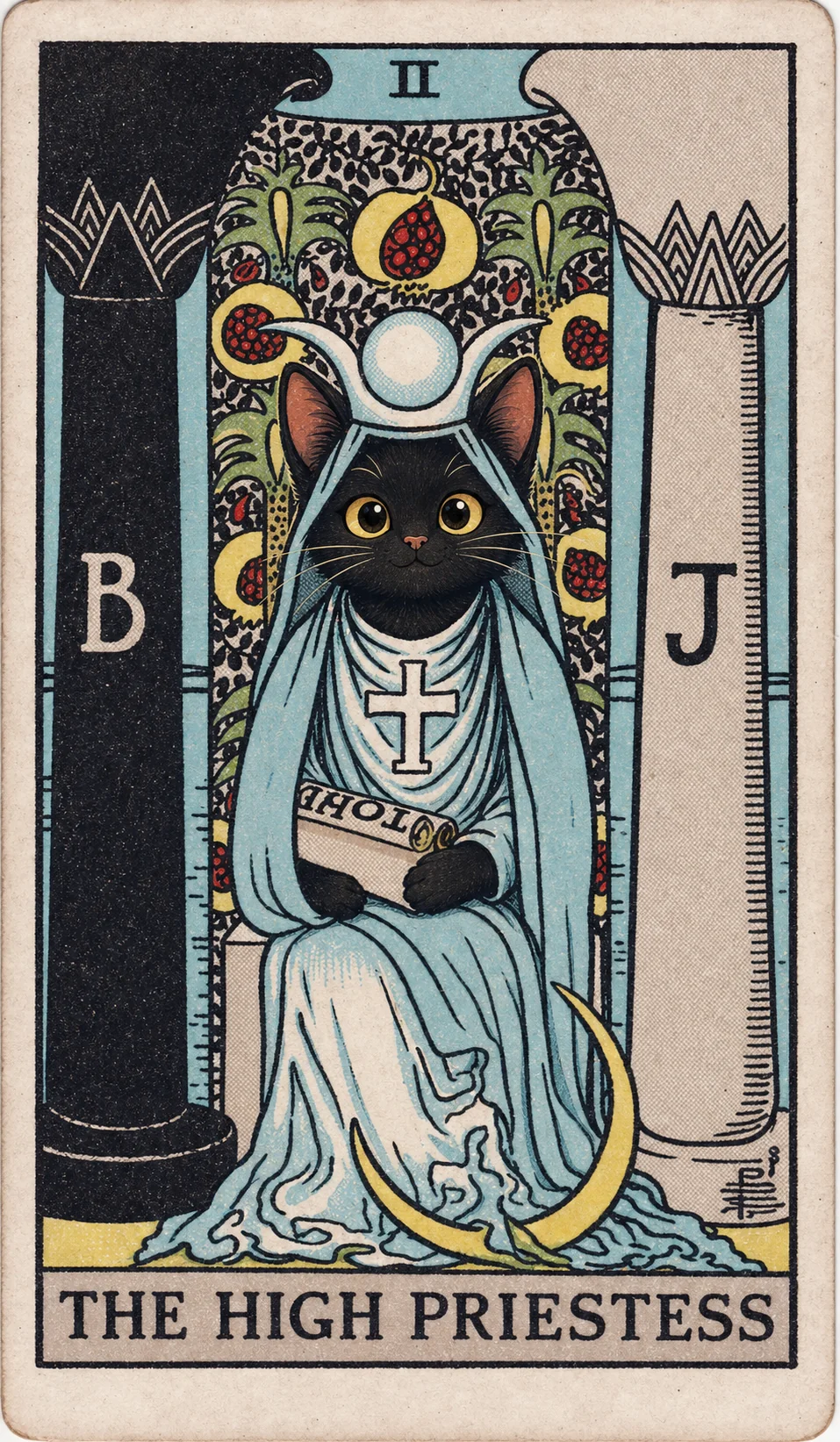
Less than you'd think. Tarot began as a card game in the 1400s; reading it for insight came centuries later, and most of the "rules" people cite (never buy your own deck, never let others touch it) are recent folklore, not ancient law. A practice that survived the jump from parlor game to mirror can survive the jump to a screen. If someone tells you a digital reading doesn't count, ask them where the rule is written. There's no book. There's just what helps you pay attention.
The both/and answer
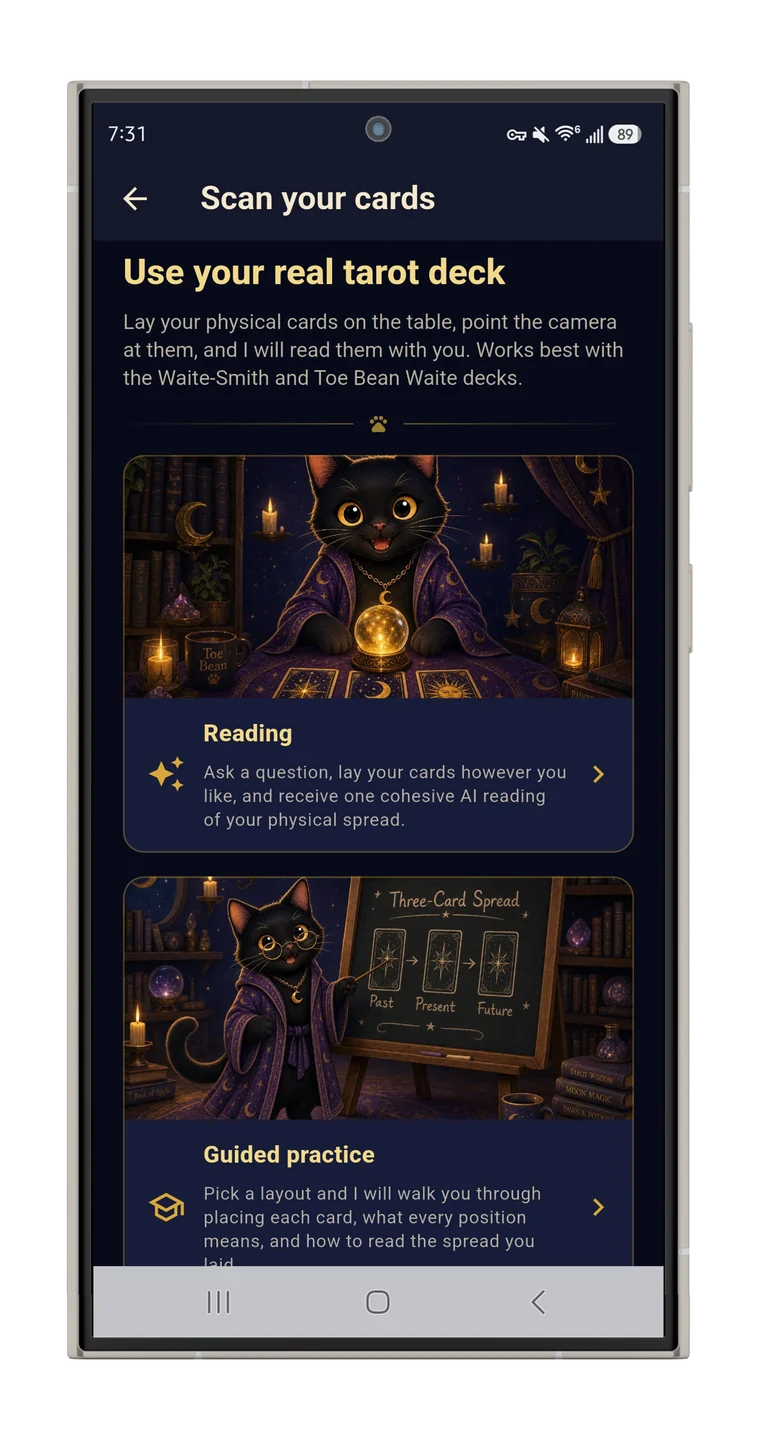
Most readers we know end up with both: paper for slow evenings and reading for friends, the phone for the daily habit and the journal. The two don't even have to stay separate. Our app can photograph a spread you laid out with your paper deck and interpret the cards on your table, so the ritual stays physical and the reference and journal stay digital. That bridge is the thing the Toe Bean Tarot app was built around (Android only).
Still weighing your options? The best tarot apps roundup compares the digital side honestly, and is it okay to read tarot on your phone covers the etiquette question head-on.