Articles · Culture
A Brief, True History of Tarot (It Started as a Card Game)
The history of tarot is shorter and stranger than the legends. Tarot began in 1400s Italy as a card game, stayed one for about three centuries, picked up an invented Egyptian backstory in 1781, was rebuilt into an occult system by French and British magicians, got its modern look in 1909, and hit the bookstore shelf in the 1970s. Here's the timeline, myths left out.
1370s: playing cards reach Europe
Playing cards arrived in Europe from the Islamic world in the late 1300s. The Mamluk decks had four suits: cups, coins, swords, and polo sticks. Europeans, not being polo people, turned the sticks into batons, which became our Wands.
1440s: tarot is invented in northern Italy
Tarot shows up in Milan, Ferrara, and Bologna in the 1440s. The earliest decks were hand-painted, gilded luxury objects made for the Visconti and Sforza families of Milan; surviving cards sit in museums and libraries today. The new idea was a fifth suit of permanent trump cards added to a regular deck, so the game was called trionfi, "triumphs." The name tarocchi appears around 1500. It's a trick-taking game, and people still play it: French Tarot, Austrian Tarock, and regional Italian games.
1450 to 1780: three centuries of just a game
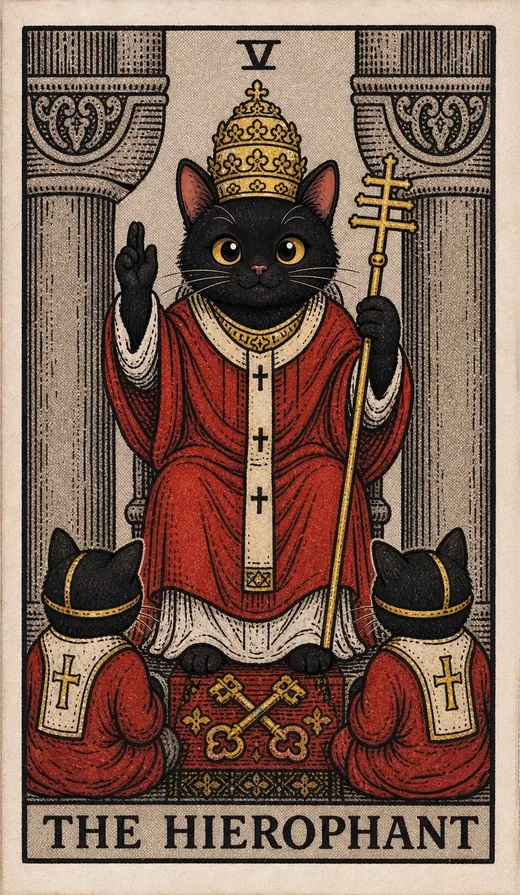
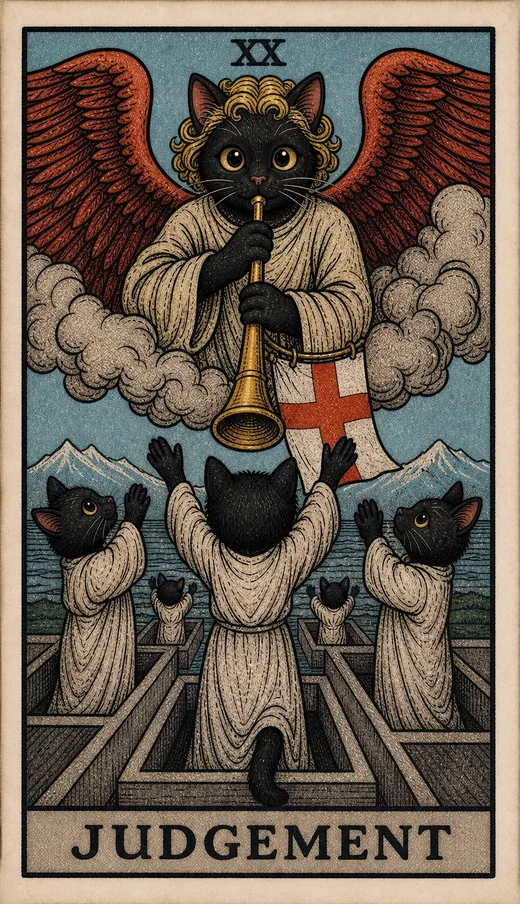
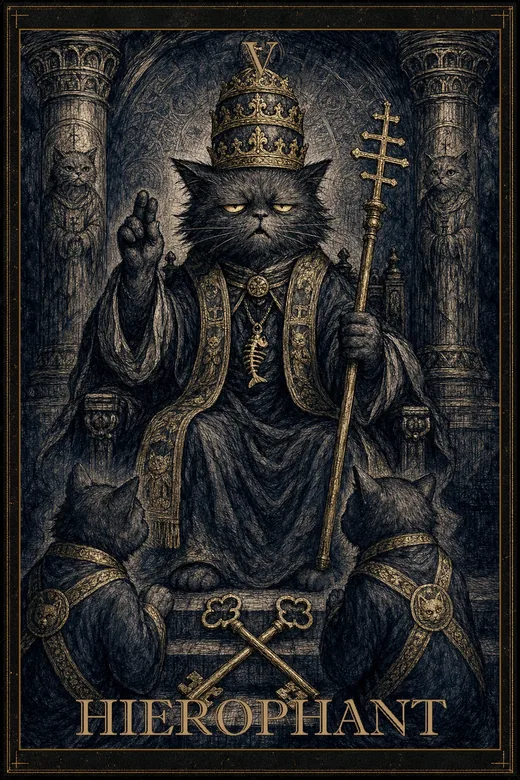
For about three hundred years, tarot was a game and nothing more. The trumps' imagery (the Pope, the Emperor, Death, the Devil, the Sun, the Moon, Judgement, the World) came from the parade of allegorical figures every Renaissance Italian recognized, not from any secret doctrine. Those trumps are the cards we now call the Major Arcana, and the one modern decks label The Hierophant was plainly The Pope in the old ones. In the 1600s and 1700s, French printers, especially in Marseille, standardized the woodcut design, and most European decks followed that Marseille pattern. (How it differs from the decks that came later is in Rider-Waite vs Thoth vs Marseille.)
1781: the Egyptian story is invented
Antoine Court de Gébelin, in volume 8 of his encyclopedia Le Monde primitif, claimed tarot preserved the wisdom of ancient Egyptian priests. He wrote this before anyone could read hieroglyphs (the Rosetta Stone was found in 1799 and deciphered in 1822), and there's no evidence for it. It stuck anyway. Around the same time, Jean-Baptiste Alliette, writing as Etteilla, became the first known professional tarot fortune-teller: he published on card reading in 1770 and in 1789 issued the first deck designed for divination.
1850s to 1888: tarot becomes an occult system
In the 1850s, Éliphas Lévi linked the 22 trumps to the 22 letters of the Hebrew alphabet and to Kabbalah, and tarot became a system for occultists. In 1888 the Hermetic Order of the Golden Dawn was founded in London with tarot at the center of its teaching; members included A. E. Waite, Pamela Colman Smith, Aleister Crowley, and W. B. Yeats. This is the century that gave tarot its spooky reputation, worth remembering the next time someone asks whether tarot is a religion. It's a card game that went to magic school.
1909: the deck you picture
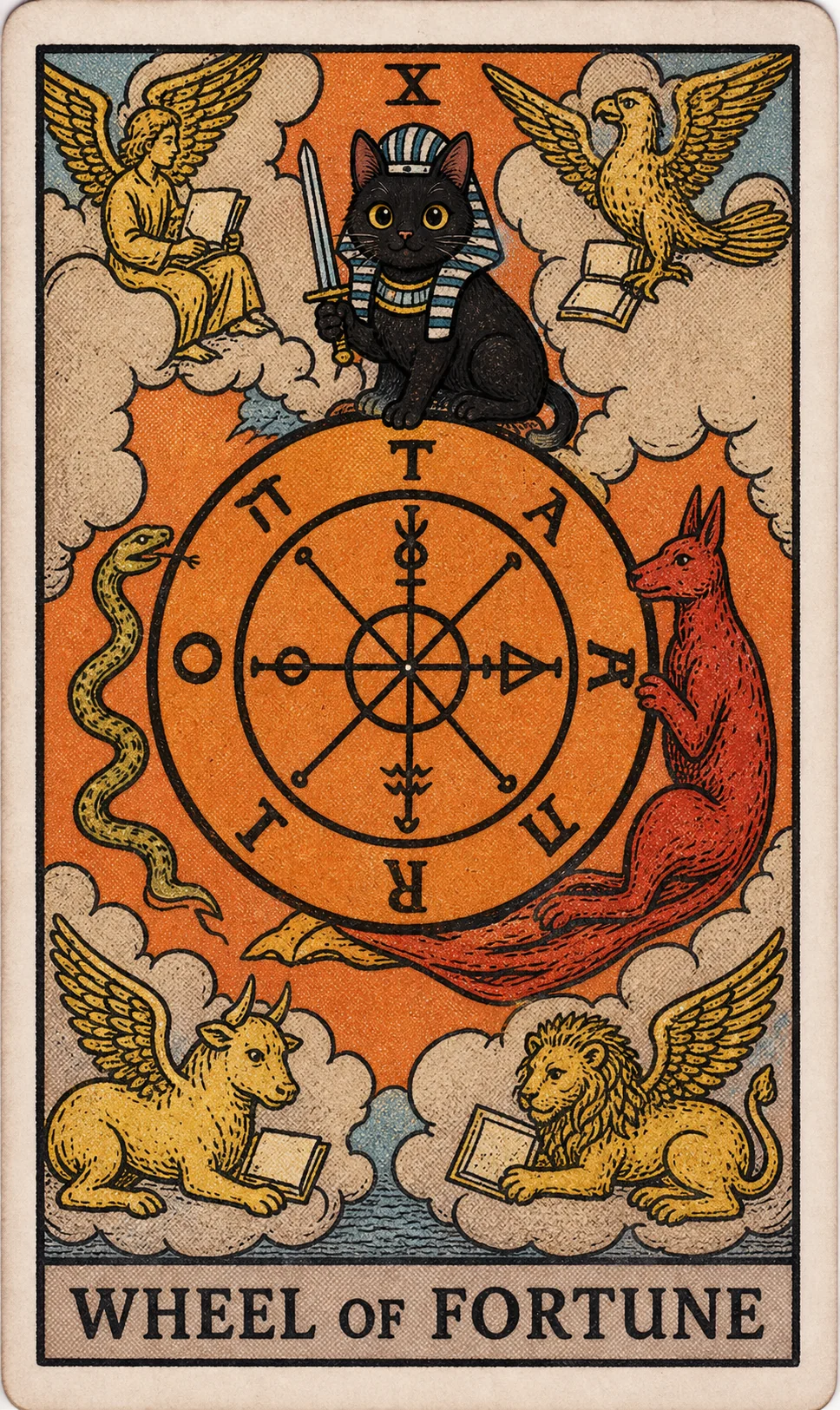
The Rider-Waite deck was published in London by William Rider & Son. Arthur Edward Waite directed it, and Pamela Colman Smith drew all 78 cards. The big innovation: full scenes on every Minor Arcana card instead of arrangements of pips, which is what makes tarot learnable from the pictures. Today the deck is usually called Rider-Waite-Smith, and her Wheel of Fortune still wears the occult era's fingerprints: the rim is lettered TARO, which also reads ROTA, Latin for wheel.
1938 to 1971: Thoth, then the bookstore
Between 1938 and 1943, Aleister Crowley and the painter Lady Frieda Harris created the Thoth deck, though it wasn't published as cards until 1969. In 1971, US Games Systems, led by Stuart Kaplan, began publishing the Rider-Waite deck in the United States, and the 1970s carried tarot into bookstores and mainstream culture.
Today: thousands of decks, and a quieter way to read
Crowdfunding made small print runs possible, so there are now thousands of independent decks, plus apps, plus a return to a reflective, journaling style of reading. That shift is a big part of why tarot is having a moment again, and of why readings feel so accurate when you use them as a mirror rather than a forecast. Tarot also picked up company: oracle decks, which have no fixed structure at all, and the black cat, which has no historical business here and shows up anyway.
To see the 1909 art next to something newer, the Toe Bean Tarot app includes the public-domain Waite-Smith deck alongside two original decks, so you can flip between them (Android only). Curious what the cards mean? Start with all 78 tarot card meanings, explained simply.