Articles · Culture
Pamela Colman Smith: The Artist Behind the Rider-Waite Deck
Pamela Colman Smith drew all 78 cards of the Rider-Waite tarot, the most copied deck in the world, and for most of a century her name wasn't on the box. She did the whole deck in about six months in 1909 for a flat fee. Here's who she was and why her pictures still teach people tarot.
She made the numbered cards tell stories
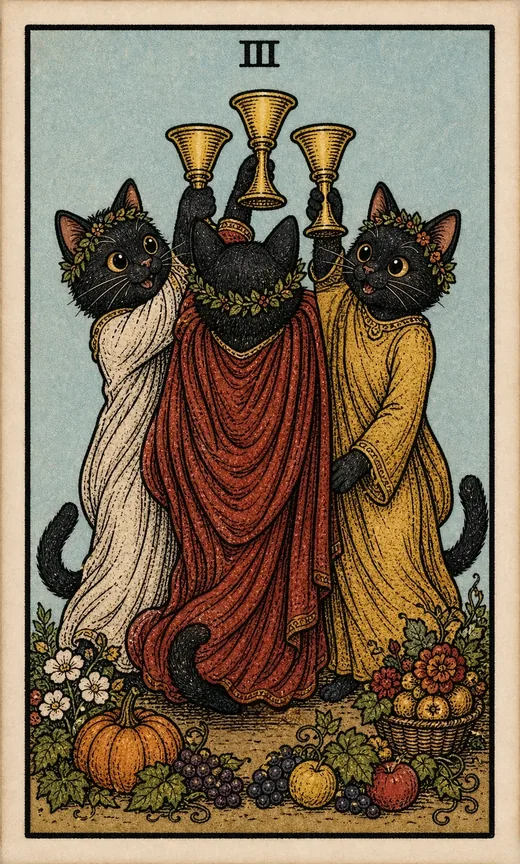
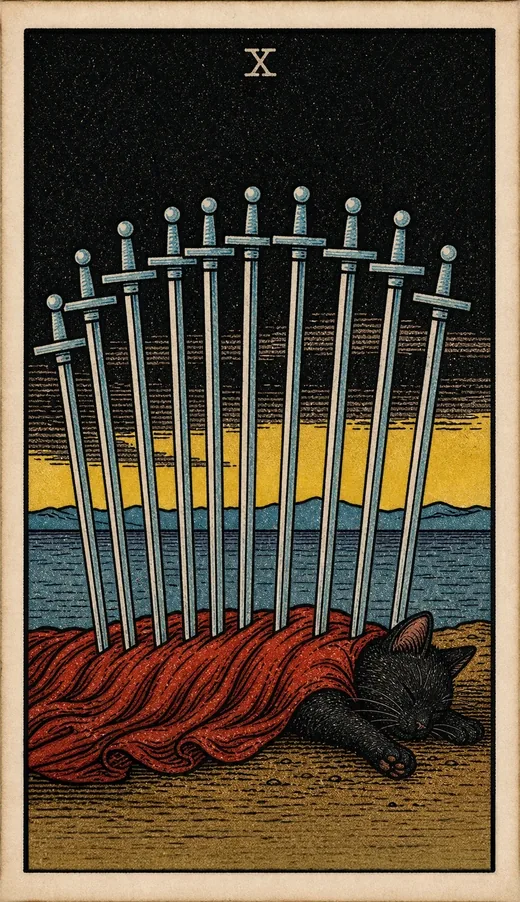
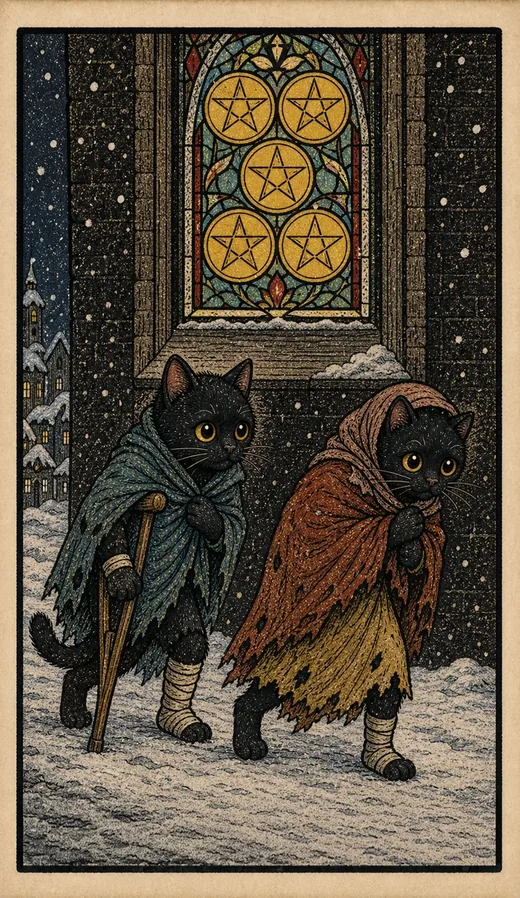
Before Smith, most decks treated the numbered Minor Arcana like playing cards: the Marseille pattern's Five of Swords is five swords (the three systems are compared in Rider-Waite vs Thoth vs Marseille). Smith drew a scene instead, a person picking up swords after a fight. Her Three of Cups is three friends toasting in a garden. Her Ten of Swords is a figure pierced by all ten blades with dawn breaking behind (the traditional meaning is pain and sadness, "not violent death," which is a relief). All 40 numbered cards got a scene, which is why a beginner can read this deck from the pictures, and why nearly every modern deck copies her.
She had a precedent in the Sola Busca, an Italian deck from about 1491 with illustrated pips, which she'd seen in photographs at the British Museum in 1907; her Three of Swords and Ten of Wands echo it. Our walkthrough of the Suit of Swords shows a whole suit of her stories in order.
Pixie
She was born on 16 February 1878 in Pimlico, London, to American parents, and grew up between London, Manchester, and Kingston, Jamaica. She studied art at the Pratt Institute in Brooklyn from 1893 but left before graduating because of poor health.
The actress Ellen Terry nicknamed her "Pixie." Smith designed and toured with Terry and Henry Irving's Lyceum Theatre company, and it shows: look at her cards with that in mind and they turn into stage sets, figures posed in a shallow foreground with a painted backdrop behind.
Six months in 1909
Smith joined the Hermetic Order of the Golden Dawn in 1901 and, when it split, followed Arthur Edward Waite's branch. In 1909 Waite commissioned a deck from her. She drew all 78 cards between roughly April and October, was paid a flat fee, and got no royalties. In a letter to the photographer Alfred Stieglitz she said the job had brought "very little cash."
William Rider & Son published the deck in London in December 1909 with Waite's guidebook, The Key to the Tarot. It was sold as the "Rider-Waite" deck: publisher and writer. The artist's name was left off for decades. How tarot got from an Italian card game to her drawing board is in our brief history of tarot.
The cat at the Queen's feet
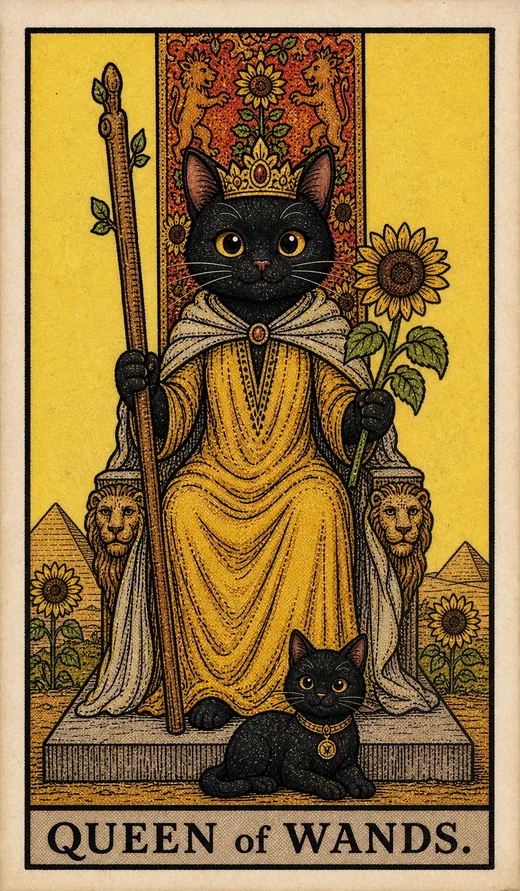
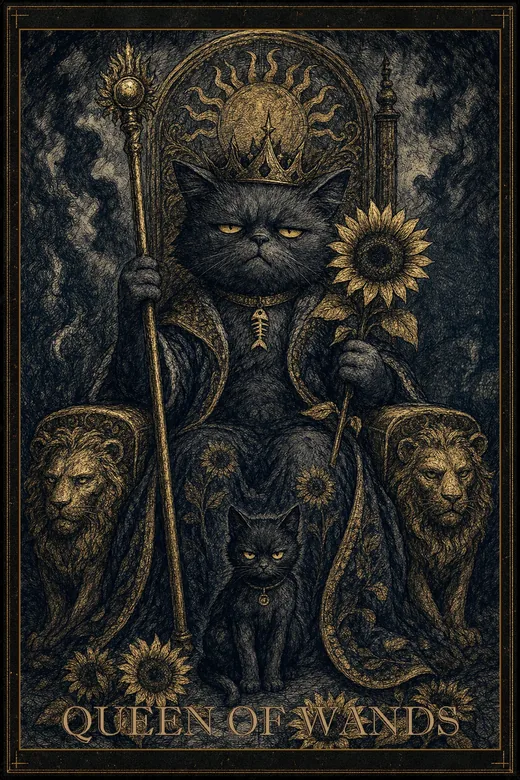
Smith signed every card with a small "PCS" monogram and left one more mark: a little black cat at the feet of the Queen of Wands. It made it into our deck. Our Queen is a black cat herself, on a lion throne with a leafy staff and a sunflower, and a smaller black cat in a gold collar sits at her feet looking pleased with itself. Black cats and tarot have a long shared history, and this small one may be the most famous of the lot.
The quiet years
Smith converted to Roman Catholicism in 1911. An inheritance let her move to Cornwall, first to the Lizard and later to Bude. She died there on 18 September 1951, in debt. Her belongings were sold to cover what she owed, and she was buried in an unmarked grave whose location isn't known.
Recognition came late, but it came. Since the 2000s most publishers and writers have put her name on the deck (Rider-Waite-Smith, or Waite-Smith), and her wider art has been exhibited and collected in books. Part of why tarot is having a moment again is that people are finally curious about who made the pictures.
Why our deck is an homage
The 1909 artwork is in the public domain in most countries, so decks can build on it, ours included. The Toe Bean deck keeps Smith's scenes and symbols card for card and casts cats in every role. The Toe Bean Tarot app ships the public-domain Waite-Smith deck next to it, so you can flip between her original and the cat version of the same card (Android only). If her pictures make you want to read them, our guide to all 78 tarot card meanings is built on her drawings.