
Articles · Culture
Tarot vs. Oracle Cards: What's the Difference?
Tarot vs. oracle cards comes down to one difference: tarot is a fixed system of 78 cards that's the same in nearly every deck, and an oracle deck is whatever its creator wants it to be. Learn tarot once and it transfers to any tarot deck you ever pick up. Learn one oracle deck and you've learned that one deck. Everything else follows from that.
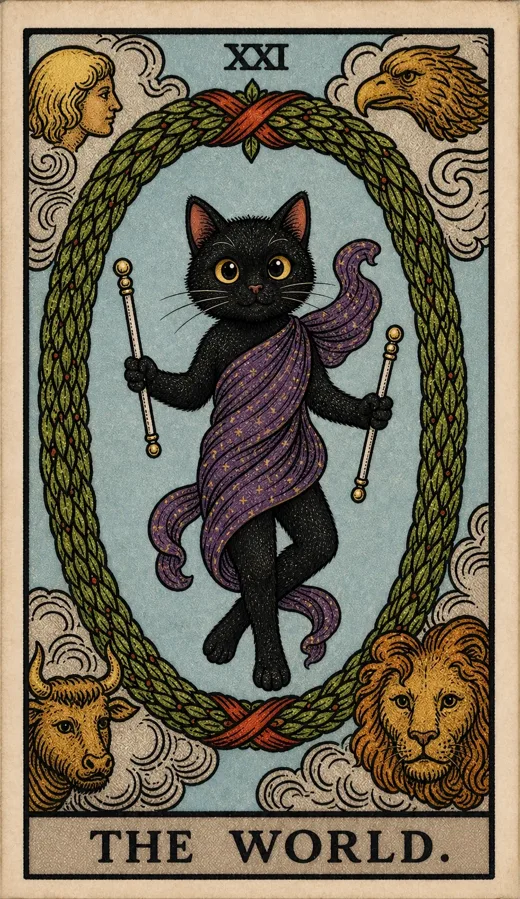
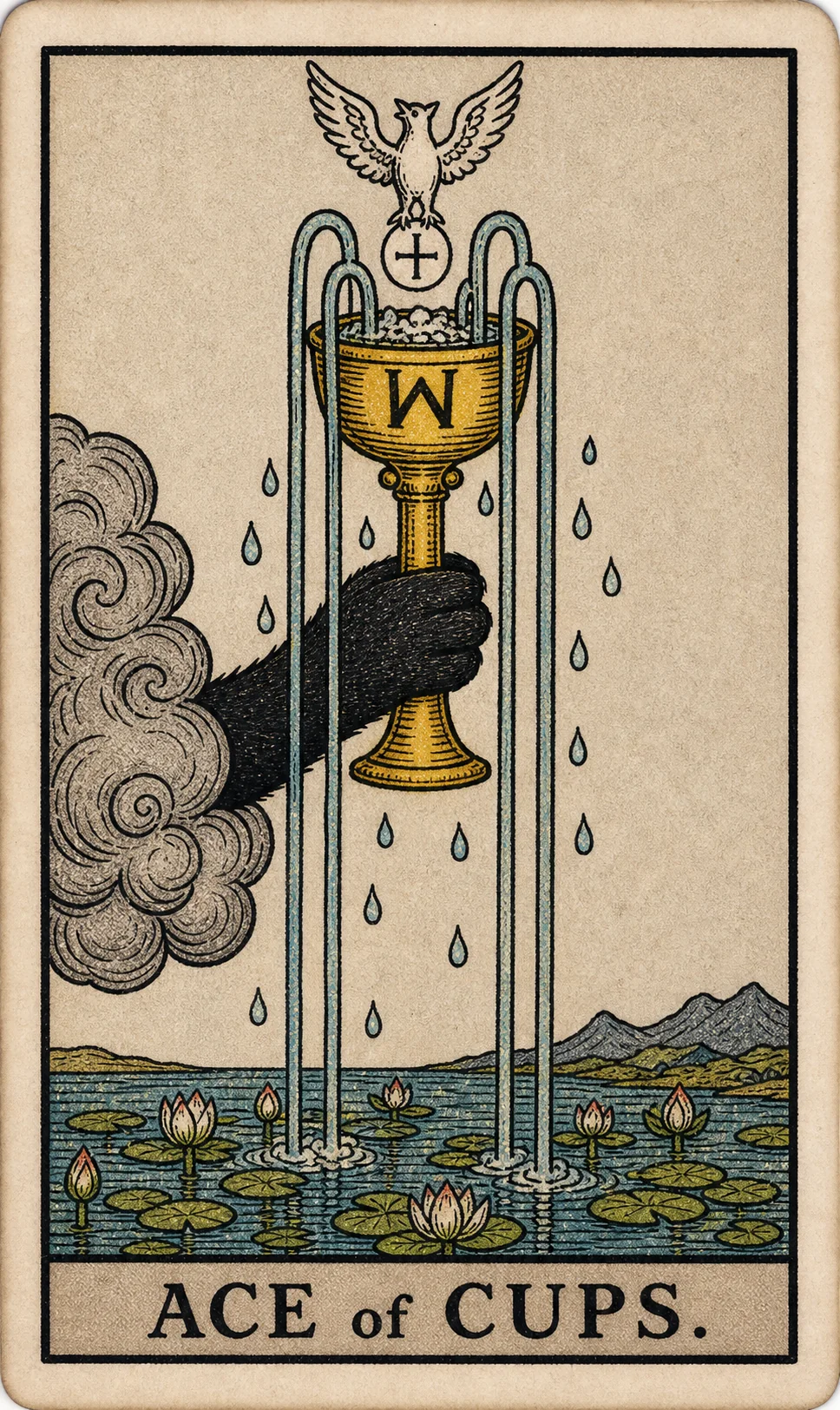
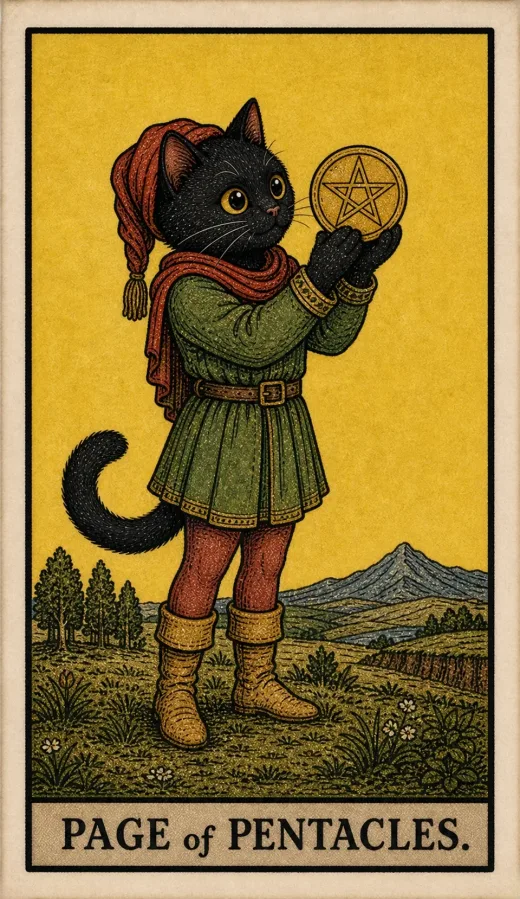
What makes a deck a tarot deck
Tarot has 78 cards, split in two. The 22 Major Arcana are numbered 0 to 21 and run from The Fool to The World. The 56 Minor Arcana come in four suits (Wands, Cups, Swords, Pentacles), each with Ace through Ten plus a Page, Knight, Queen, and King. That structure dates from 1400s Italy, when tarot was a card game and nothing more, and most modern decks follow the meanings and imagery of the 1909 Rider-Waite-Smith deck. It's why a cat in a purple robe can stand in for The World and you still know exactly which card you're holding. The full set is in our guide to all 78 tarot card meanings.
What makes a deck an oracle deck
Nothing, and that's the point. An oracle deck has no fixed structure. It might have 30 cards, 44, 55, or well over 100. The creator picks the theme (animals, affirmations, moon phases, anything at all), writes the meanings, and sets the rules. The guidebook in the box is the only authority, because no other one exists. Most oracle cards print their meaning right on the face, so you can read the deck the day you open it.
One quick aside so you don't confuse three things: Lenormand is a separate 36-card system with its own fixed images (Rider, Clover, Ship, House, and so on) and its own reading rules. It's neither tarot nor an anything-goes oracle deck.
Side by side
| Tarot | Oracle | |
|---|---|---|
| Number of cards | 78, always | Whatever the creator chooses |
| Structure | 22 Major Arcana plus four suits, fixed since the 1400s | None required; each deck is its own system |
| Meanings | Shared across decks, so they transfer | Set by the creator; the guidebook is the authority |
| Learning curve | Longer up front, pays off for life | Readable the day you open it |
| Best for | Going deep, detailed spreads, a lifelong practice | Quick daily prompts, a gentle mood check |
Which should you pick?
- You want a system you can go deep in. Learn tarot. The learning curve is real (our beginner's roadmap lays it out honestly), but once the 78 cards are in your head they stay, and the Major Arcana alone give you a lifetime of material.
- You want a light daily prompt with no study. An oracle deck is a fine choice, and there's nothing lesser about it. A card that says "Rest" on the front is doing its job.
- You're not sure. Many readers own both. This isn't a rivalry, it's a toolbox. (Salty Bean would like it noted that he reads tarot only, and only under protest.)
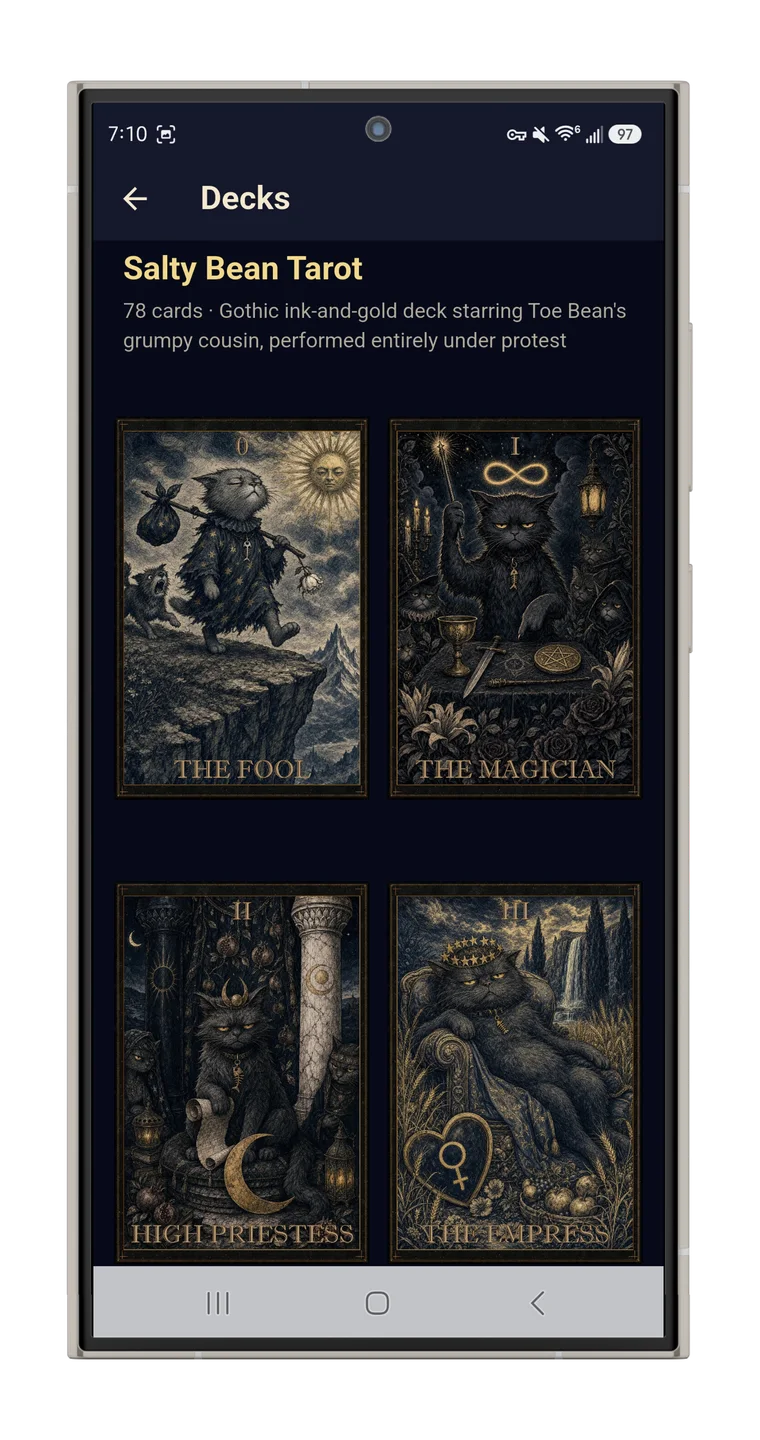
If tarot is your pick, learning the 78-card system is the thing the Toe Bean Tarot app is built for: guided lessons plus spaced repetition, with three tarot decks to learn on (Android only).
How people use both together
- Draw an oracle card first for the overall mood or theme, then pull a tarot card or spread for the detail.
- Keep the oracle deck for days when you want something gentle and quick, and reach for tarot when you want to work something through.
- Notice what each one does for you. Part of why tarot is having a moment is that the cards give you a structured way to reflect, and why readings feel accurate has a lot to do with that structure. An oracle card offers the same pause with less scaffolding.
Neither deck is the serious one. Pick the tool that gets you to sit down and think for a minute, and you've picked right.