
Articles · Lessons
How to Learn Tarot: A Complete Beginner's Roadmap
To learn tarot, you don't need psychic gifts, a mentor, or a photographic memory. You need a sensible order to learn things in, and a few minutes of practice a day. Here's the whole roadmap up front:
- Draw one card a day and sit with it
- Learn how the deck is organized before any meanings
- Learn the Major Arcana as one story
- Learn the Minor Arcana by suit, not card by card
- Start reading small spreads right away
- Save reversals and court cards for later
- Keep a journal and let time do its thing
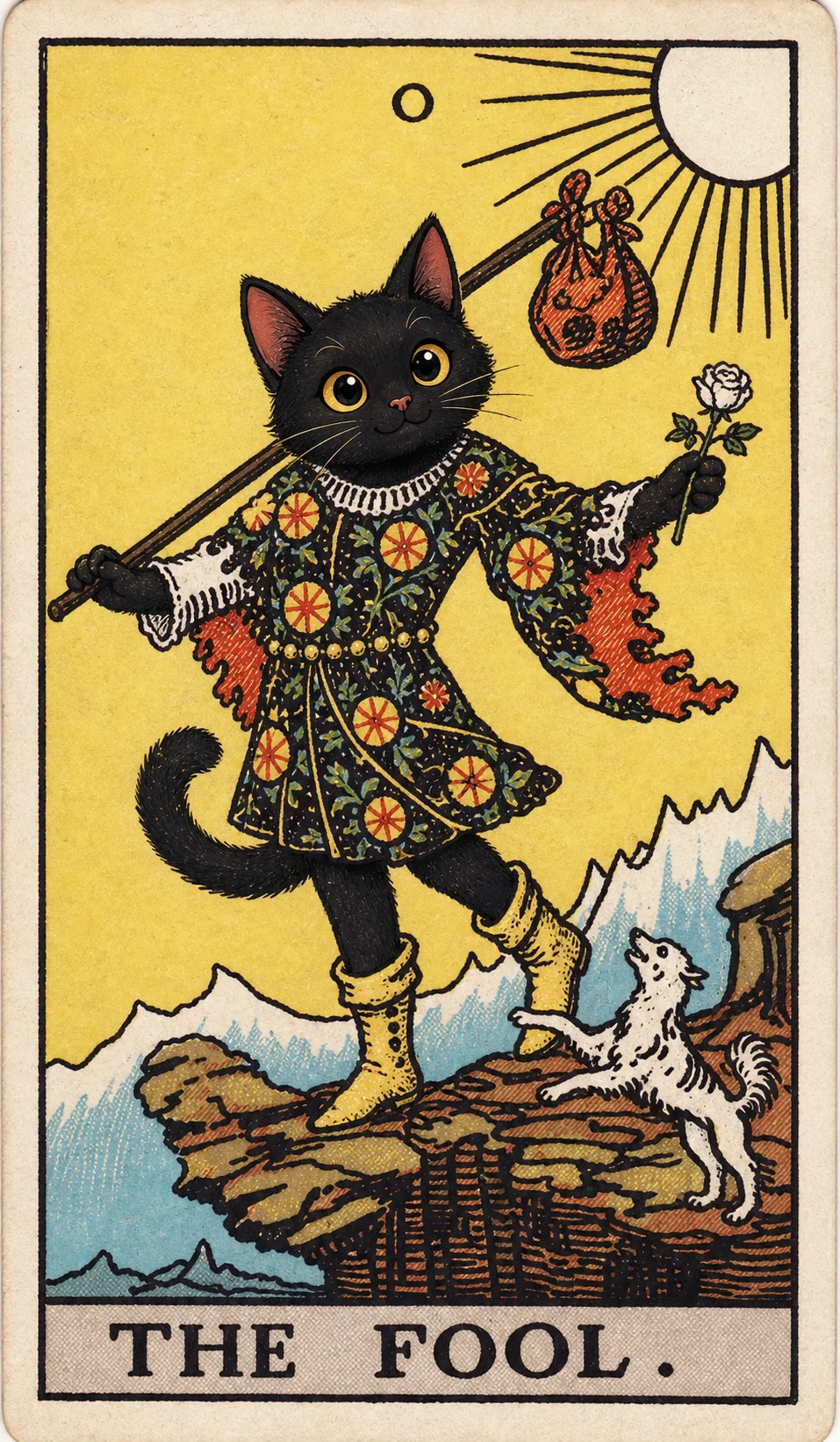
Step 1: Draw one card a day
Before you study anything, start the habit. Each morning, pull one card, look at it, and read its meaning. That's it. One card a day beats a weekend cram session because you meet each card in a real moment of your real life, which is exactly how readings work.
Step 2: Learn the deck's structure first
A tarot deck has 78 cards, and the structure carries most of the meaning:
- 22 Major Arcana: the big, archetypal cards (The Fool, The Tower, The Star). These cover the soul's journey.
- 56 Minor Arcana: four suits of 14 covering daily life. Each suit runs Ace through Ten, plus four court cards.
Once you know that skeleton, no card is ever a total stranger. You'll always know roughly what neighborhood you're in. (When you do want to look one up, here's every card's meaning in one place.)
Step 3: Learn the Major Arcana as a story
The 22 majors, in order, tell one continuous story: The Fool sets out with an open heart and meets every teacher, trial, and triumph on the way to The World. Tarot readers call it the Fool's Journey. Learning the majors as chapters in that story is far easier than memorizing 22 unrelated cards, and it's why we teach them in sequence. Our Major Arcana guide walks the whole story in three acts.
Step 4: Learn the minors by suit, not card by card
Don't grind through 56 flashcards. Learn four themes instead:
- Wands: the suit of energy and action
- Cups: the suit of emotion and the heart
- Swords: the suit of mind and conflict
- Pentacles: the suit of the material world
Combine the suit's theme with where the number sits in the Ace-to-Ten arc and you can make a fair guess at almost any card before you've formally studied it. We break the whole method down in how to memorize all 78 tarot card meanings.
Step 5: Start reading right away
You don't need to finish studying before your first reading; reading is the studying. Start with one-card draws, then try a three-card spread (past, present, future is the classic). Our guide to tarot spreads covers every layout worth knowing. Ask small, honest questions. Look up whatever you need to. Every reader you admire once read with the book open in their lap.
Step 6: Save reversals and court cards for later
Reversed cards and the sixteen court cards are the two spots where beginners most often stall out. Skip both at the start. Read everything upright, treat court cards as personalities you'll meet properly later, and add the extra layers once the basics feel easy.
Step 7: Journal, and give it time
Write down your daily card and a sentence about your day. In a few weeks you'll have your own private meanings, the kind no book can give you. Curious what a realistic pace looks like? Here's how long it takes to learn tarot, honestly.
Want the roadmap done for you?
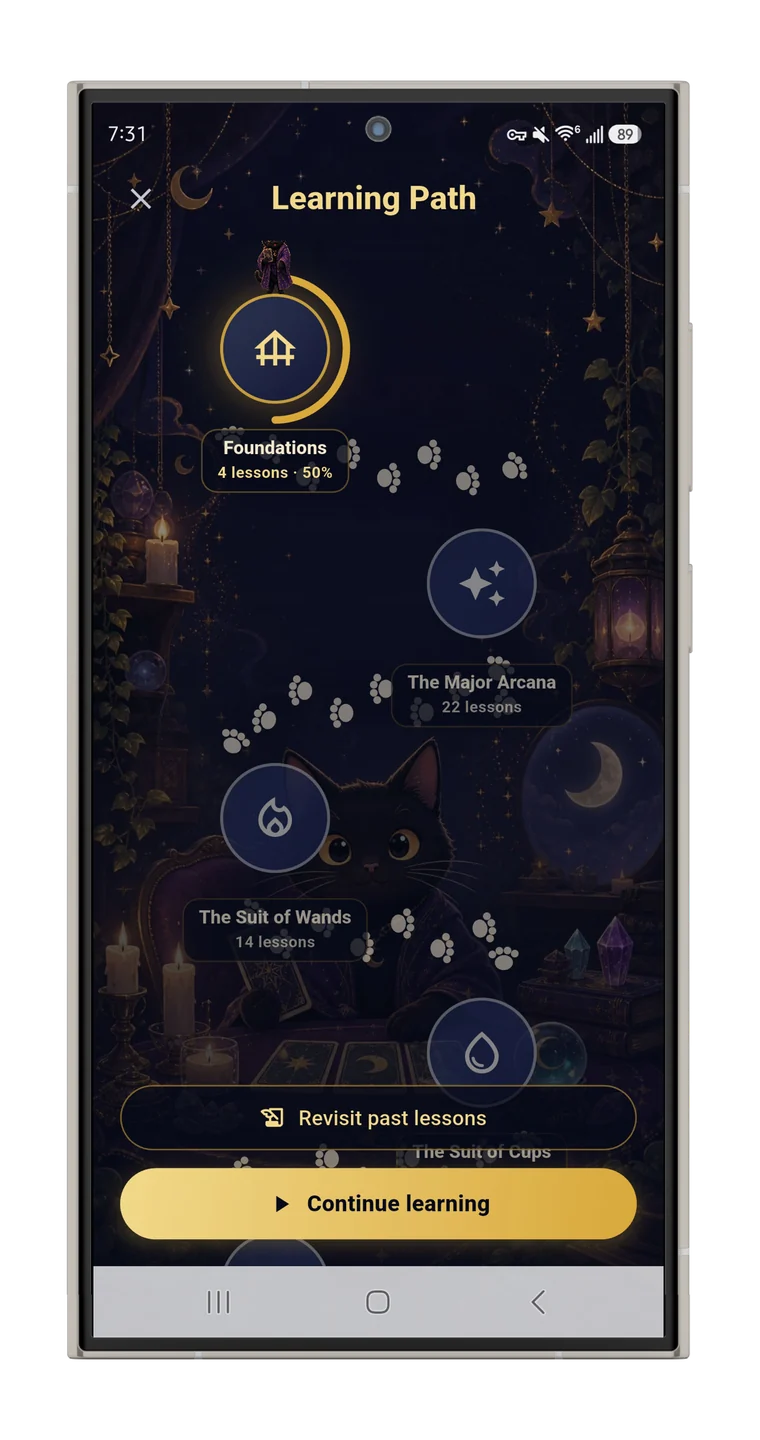
This whole path is the thing the Toe Bean Tarot app does for you: a guided curriculum with 98 lesson sections, daily cards, tarot games, and spaced-repetition review, taught by a small black cat with opinions. It's on Google Play. Want to shop around first? We compared the best tarot apps honestly, competitors included.
Every guide in this series
- A 30-day plan to learn tarot from scratch
- The best way to learn tarot as a complete beginner
- How long does it take to learn tarot?
- Is tarot hard to learn? An honest answer
- Do you need to be psychic to read tarot?
- How to memorize all 78 tarot card meanings
- Tarot journaling: why one card a day beats cramming
- 7 beginner tarot mistakes (and how to skip them)
- How to practice tarot when you have no one to read for
- Learning tarot with an app vs. books vs. courses
Curious where the cards came from before you start? Our brief, true history of tarot is a four-minute read, and it starts with a card game.